A BLUE THAT STANDS THE TEST OF TIME
The Indigo Collection
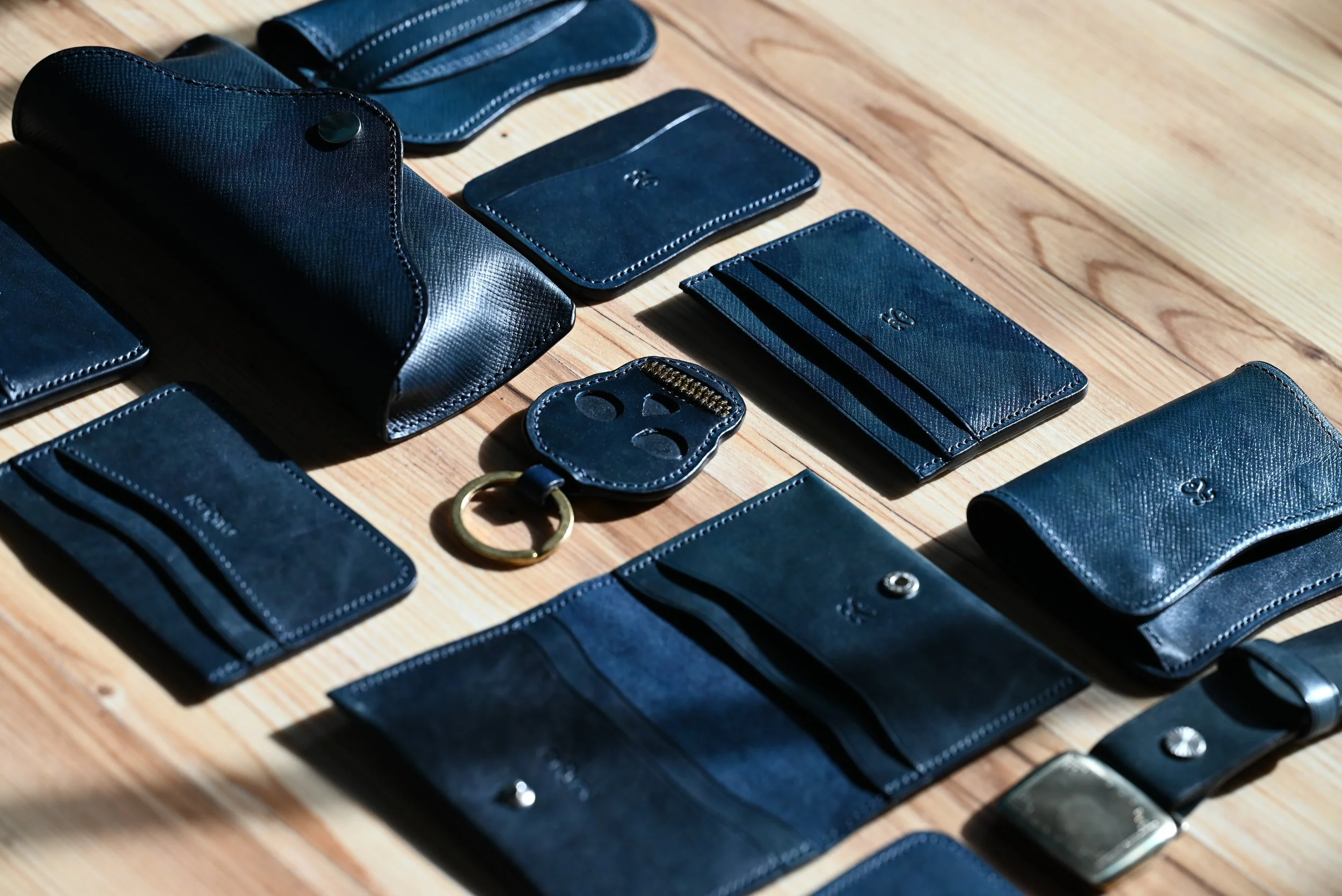
Inspired by traditional techniques, this collection of indigo-dyed vegetable-tanned leather features unique pieces with subtle yet vibrant variations.
Dyeing leather with natural indigo
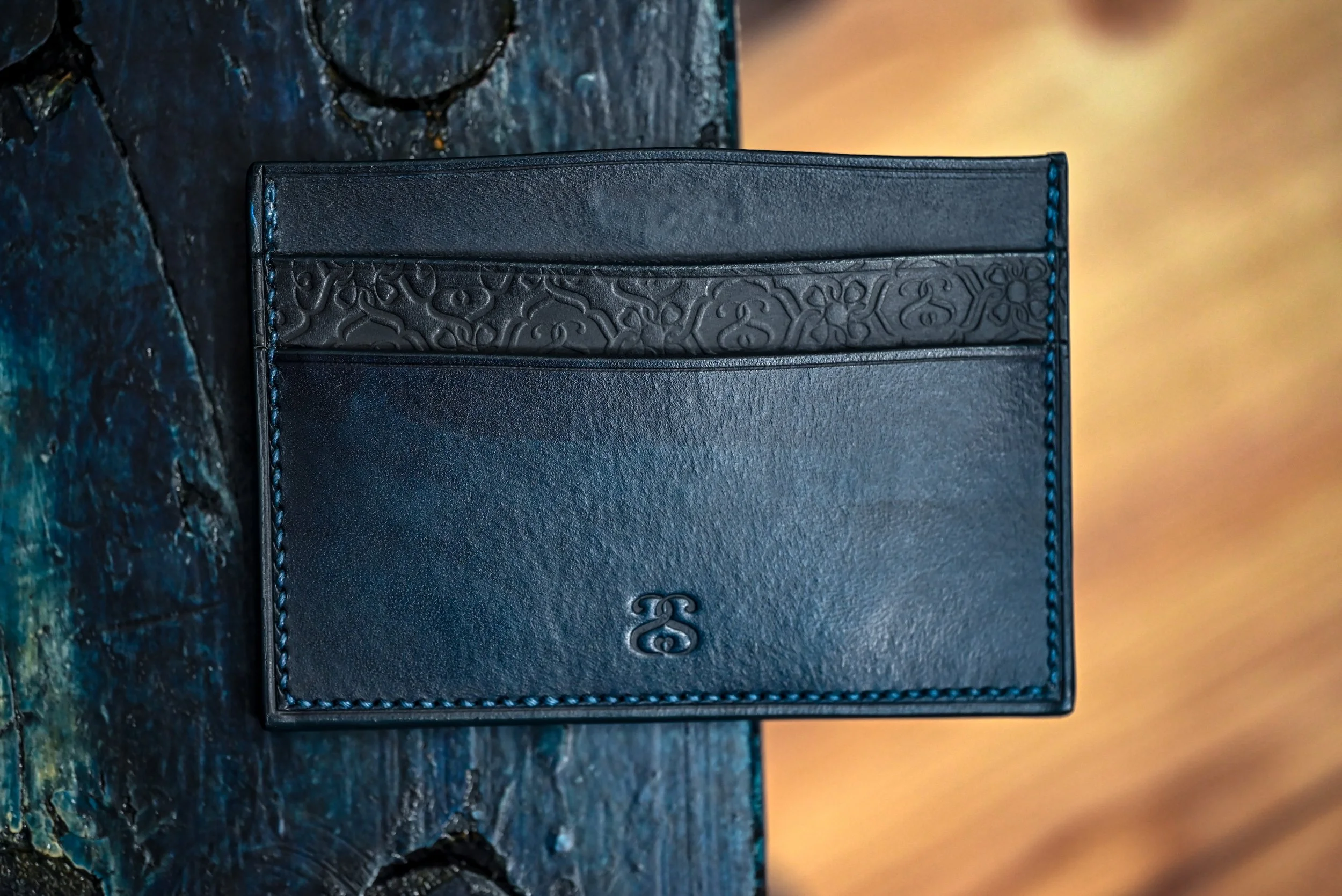
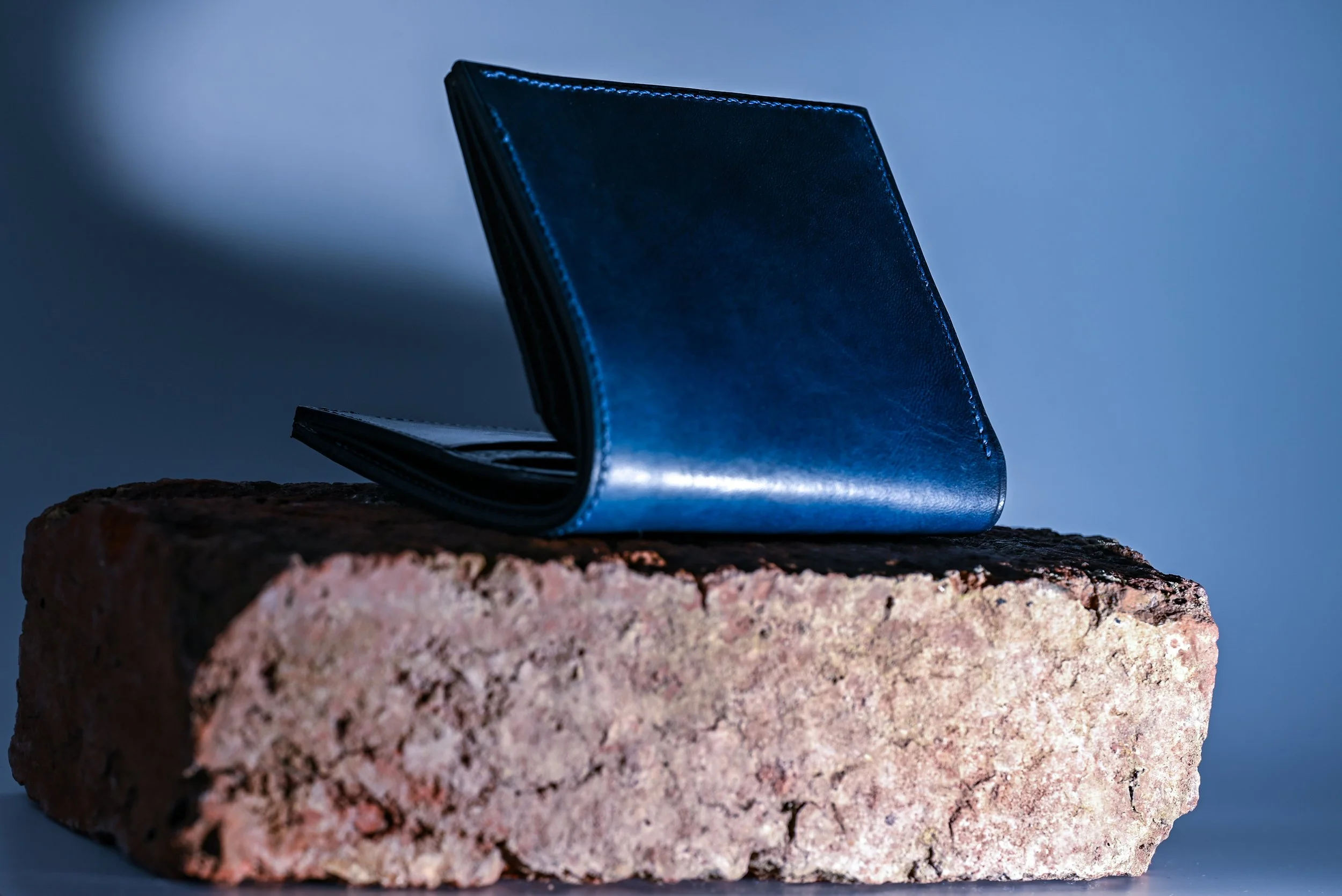
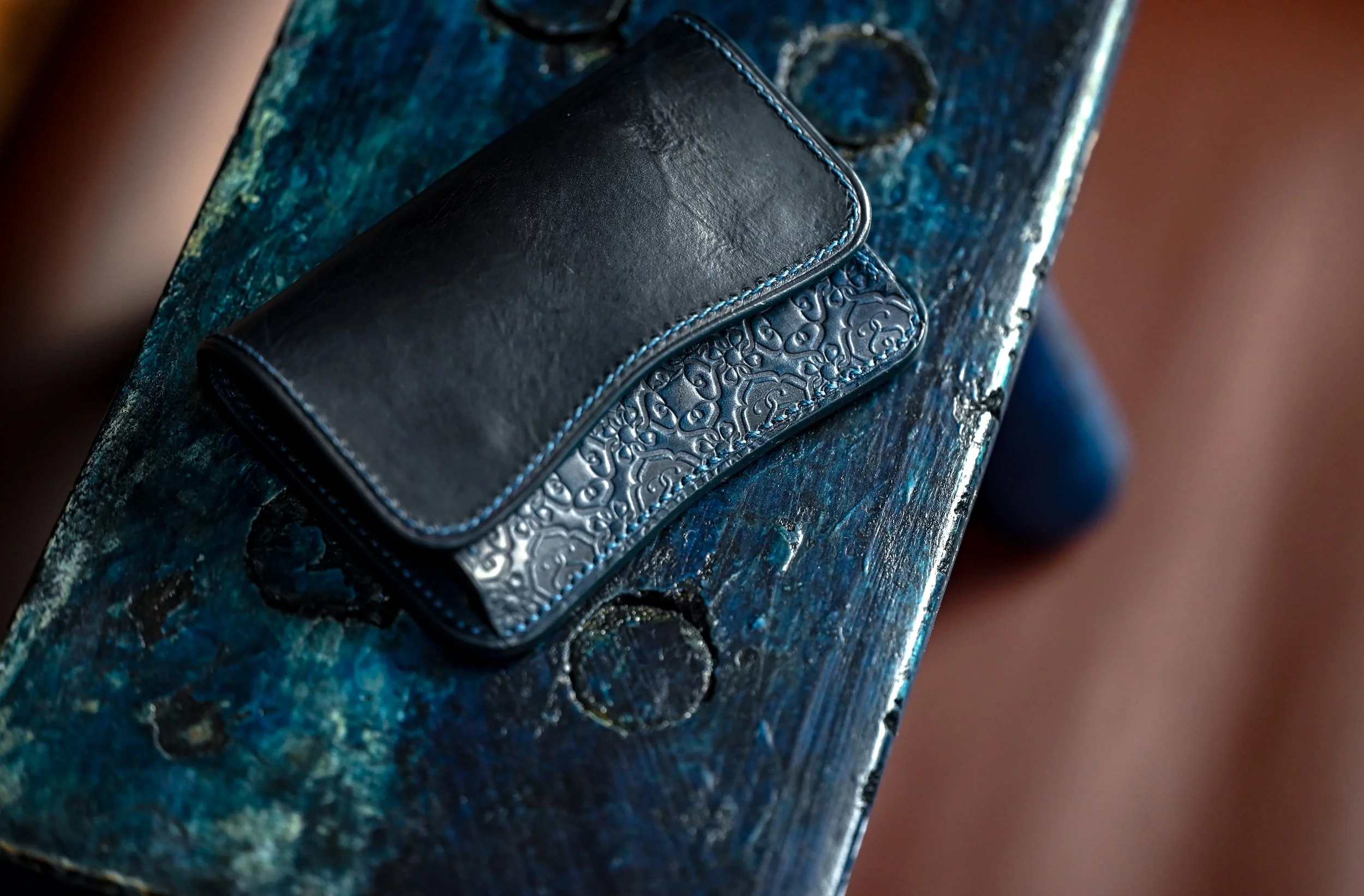
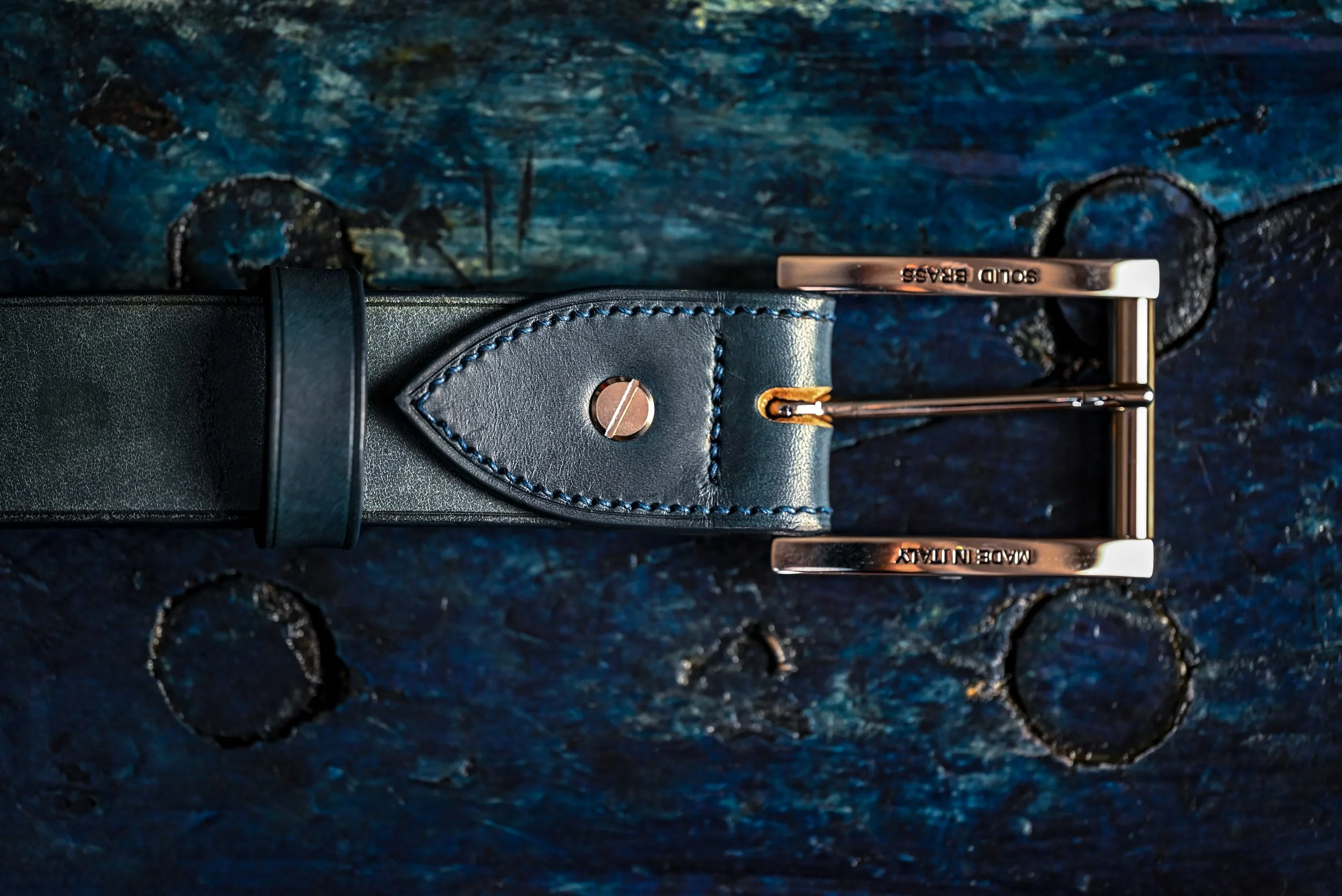
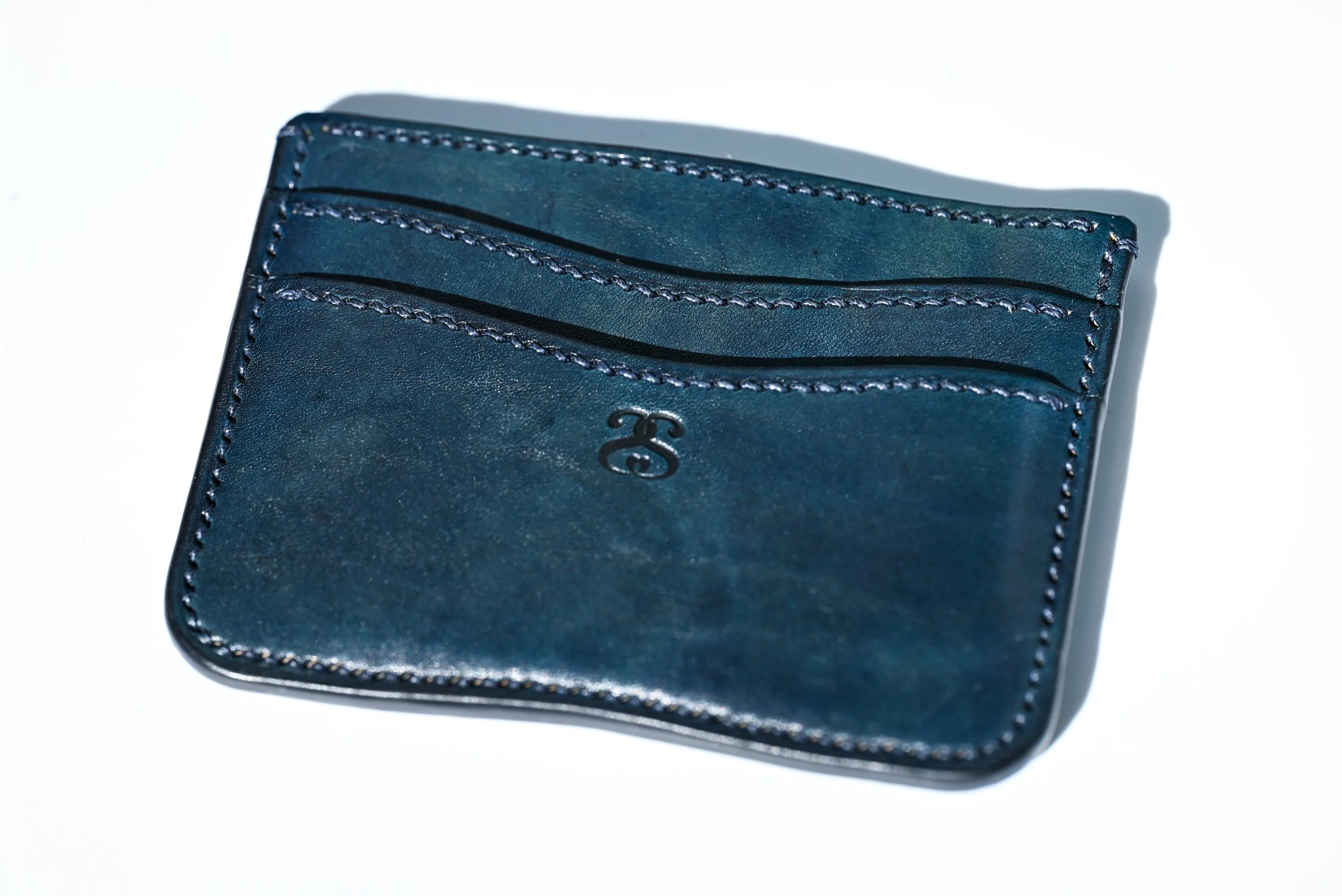
The Indigo collection features pieces made of vegetable-tanned leather dyed with natural indigo, a color rarely seen in leather goods.
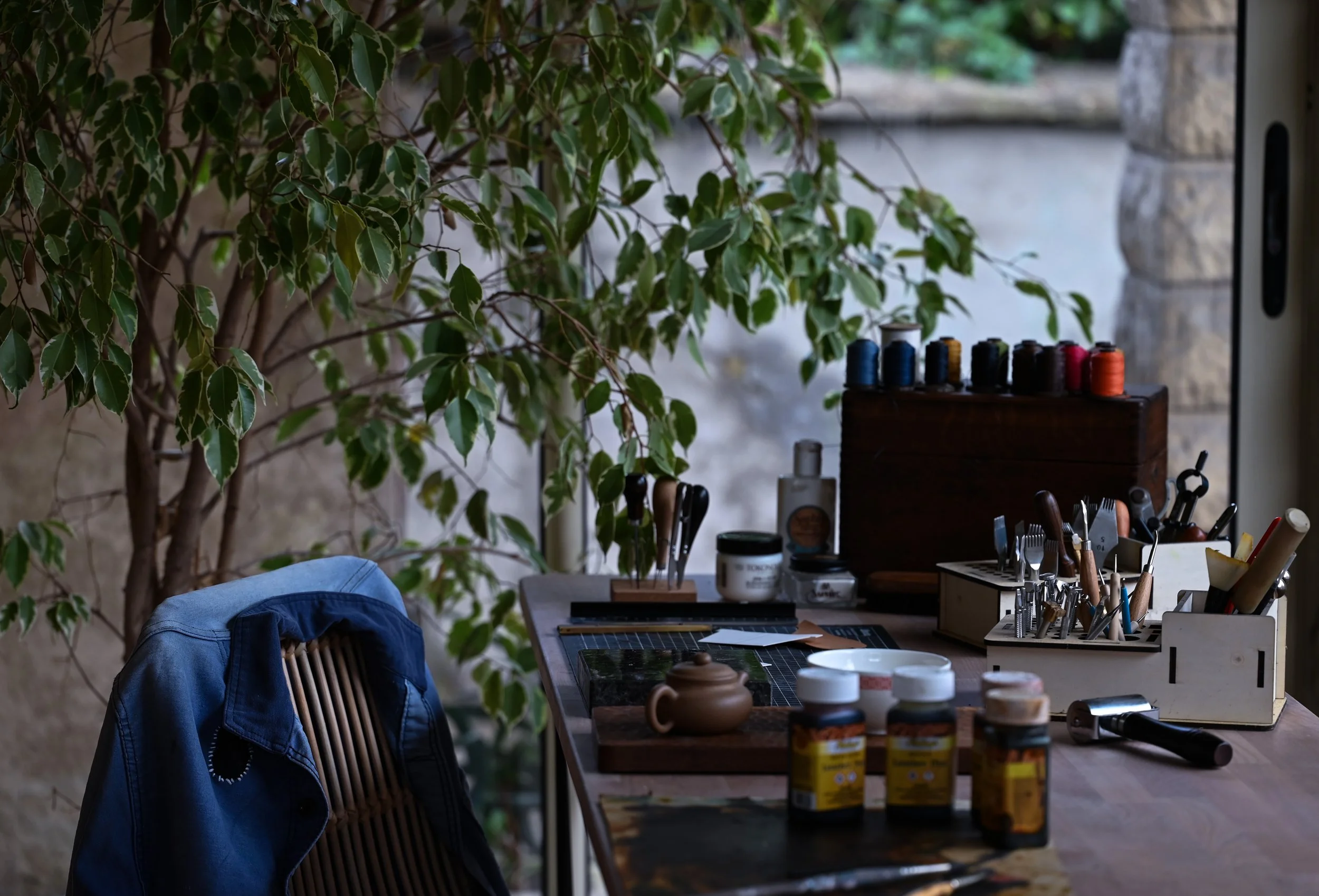
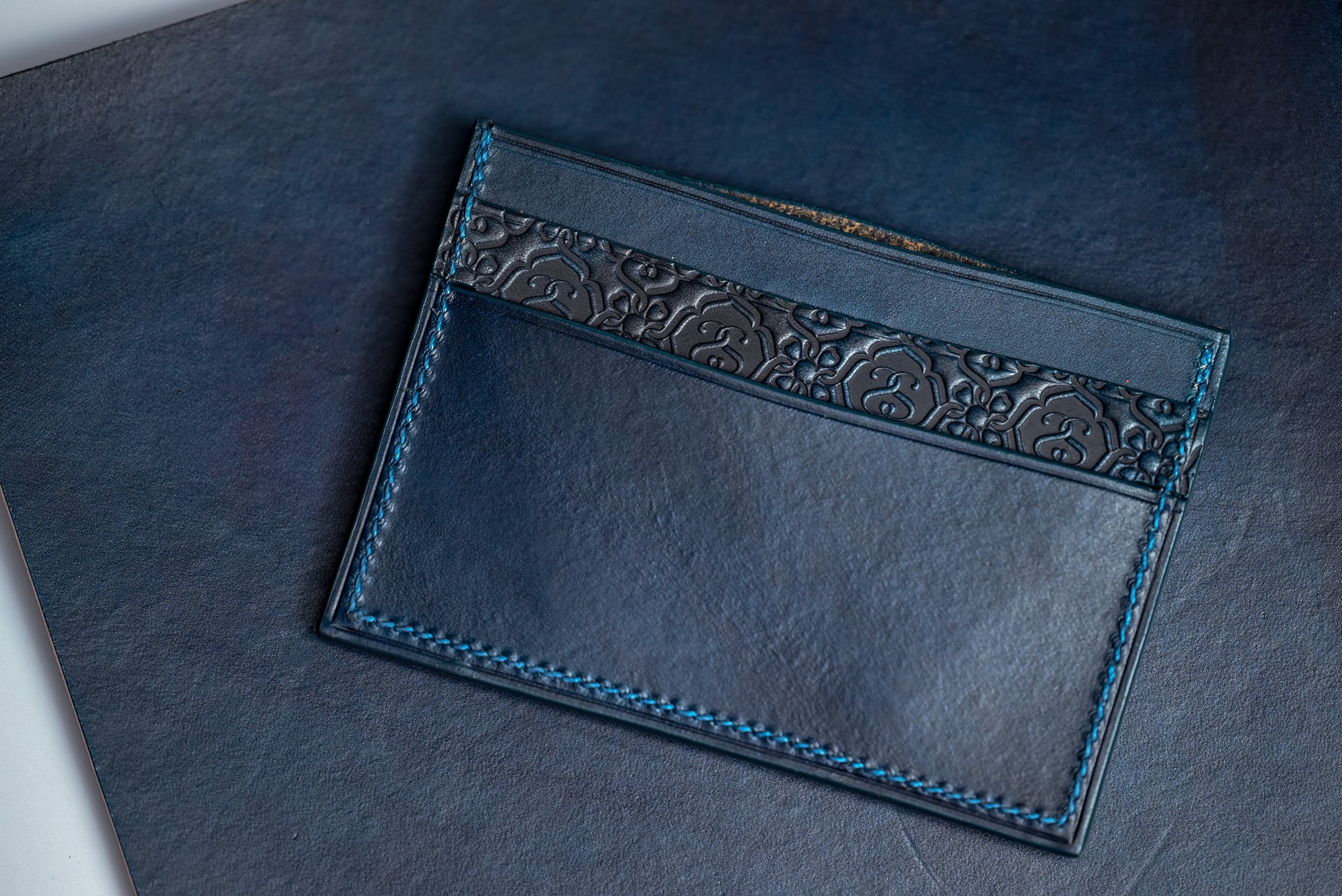
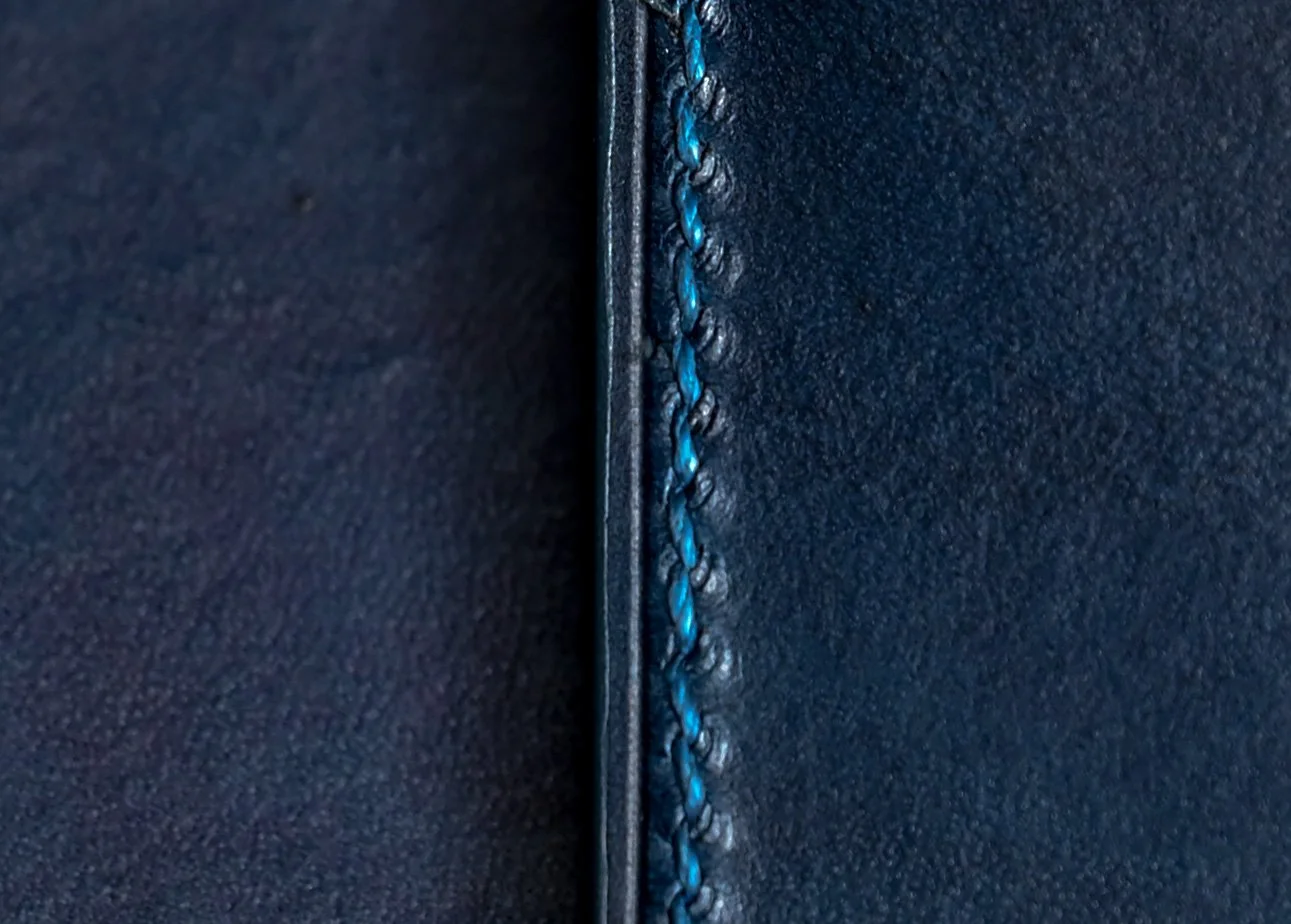
Hand-dyed in my studio, they reveal deep, subtly nuanced blues: each piece is truly one-of-a-kind. The dye penetrates the fabric without obscuring its texture.
The leather retains its suppleness and will develop a unique patina over time, gaining character with every use.
An ancient technique
Natural indigo dyeing begins with the preparation of a vat: the indigo is made soluble in a basic, oxygen-free environment.
Vegetable-tanned leather is dipped in a solution, emerges with a bluish-green hue, and then turns blue when exposed to air due to oxidation.
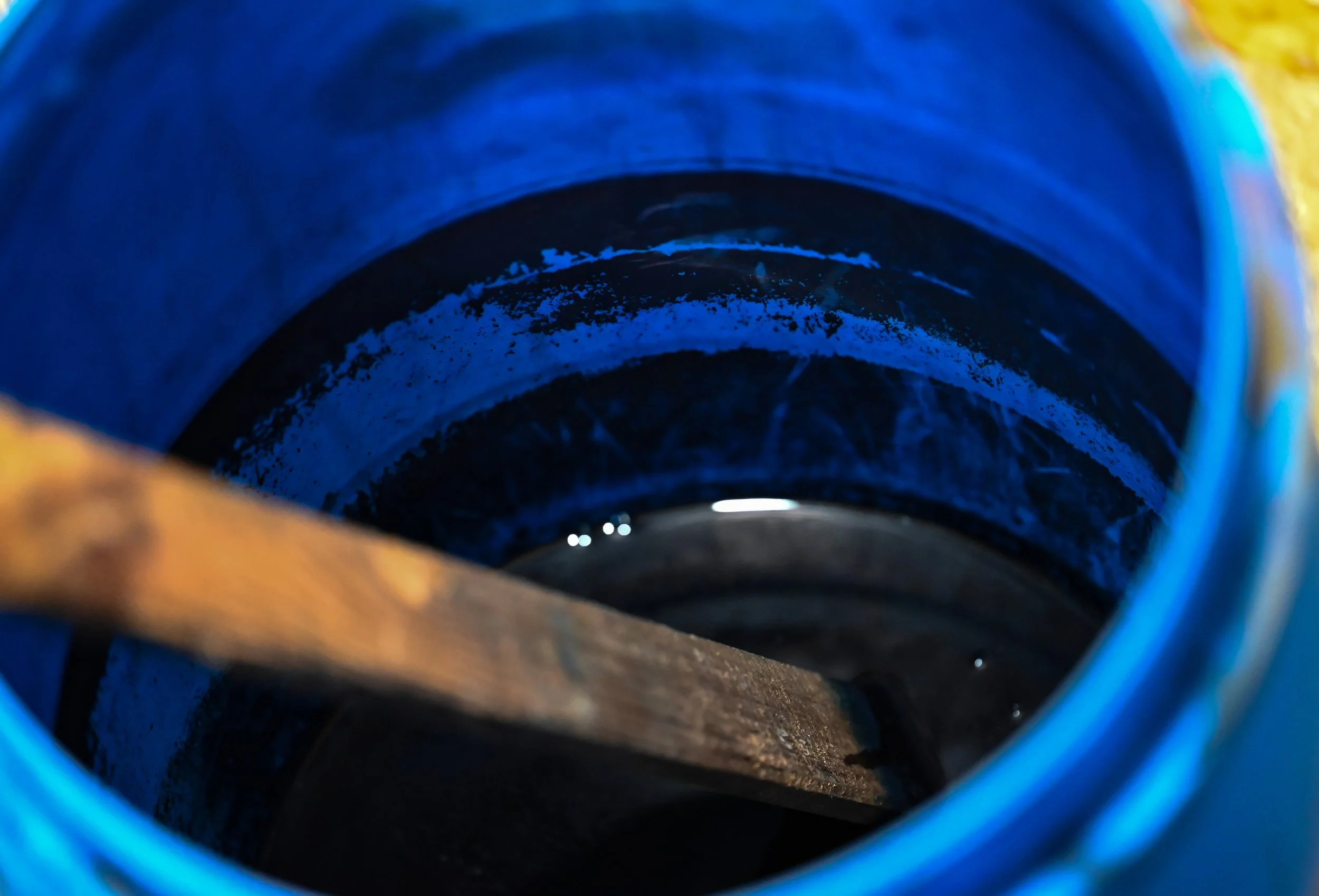
We repeat these immersion-oxidation cycles to build depth of color, before rinsing, drying, and conditioning.
This technique is demanding (requiring control of pH, temperature, and reduction levels) and is rarely used in leather goods production; it requires time and experience, which is why it produces these vibrant shades that are impossible to standardize.
Visit the gallery to see my creations: