
Derrière chaque pièce de maroquinerie, il y a une panoplie d'outils qui m'accompagnent du début à la fin. Chacun a sa fonction, et souvent son histoire. Voici les indispensables de mon établi..
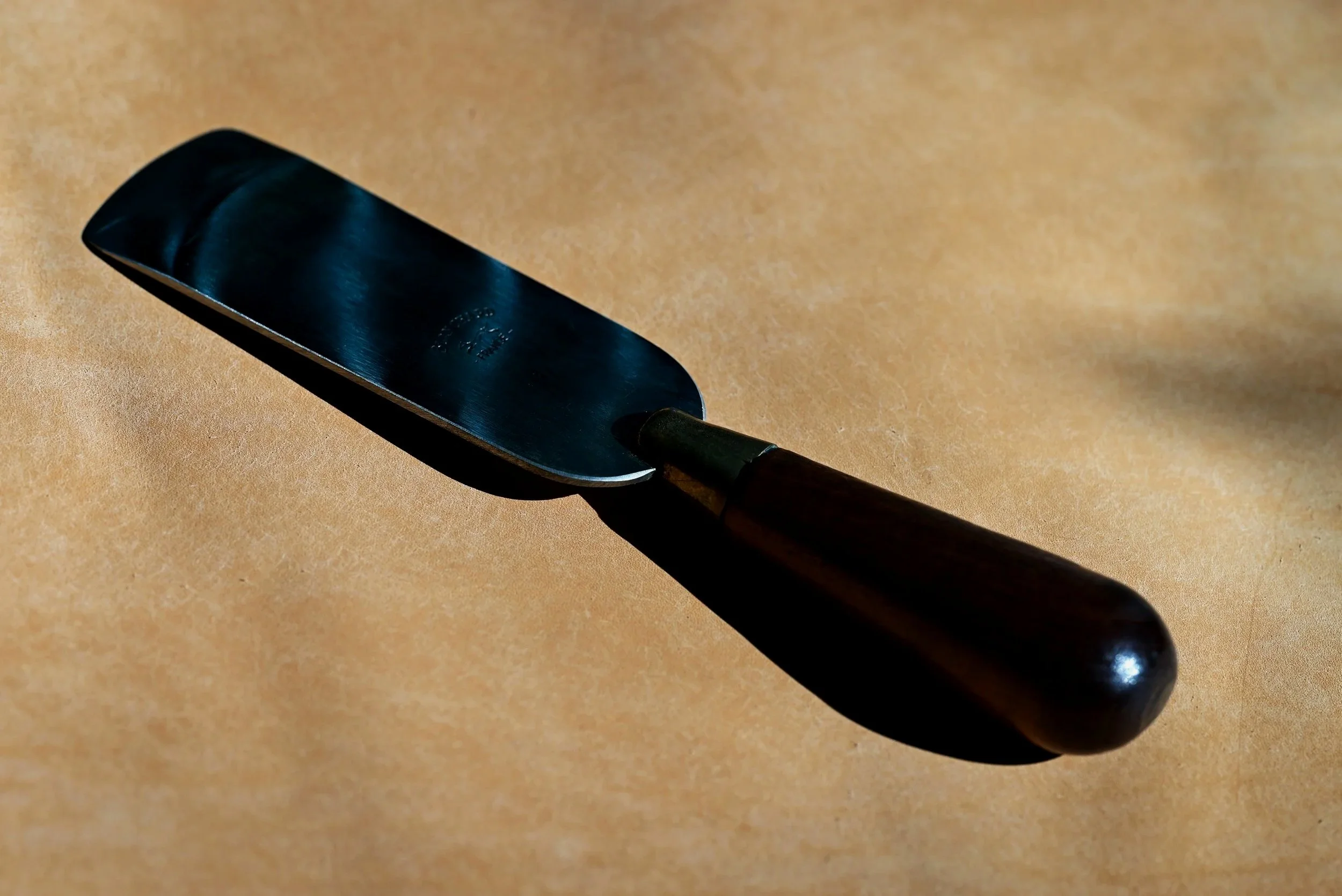
1. The trimming blade
Elle sert à affiner le cuir sur ses bords, pour faciliter les assemblages et les coutures. Je glisse la lame sur le bord du cuir, en l'inclinant, pour retirer une fine épaisseur. Le cuir se plie et se coud alors plus facilement, sans surépaisseur disgracieuse.
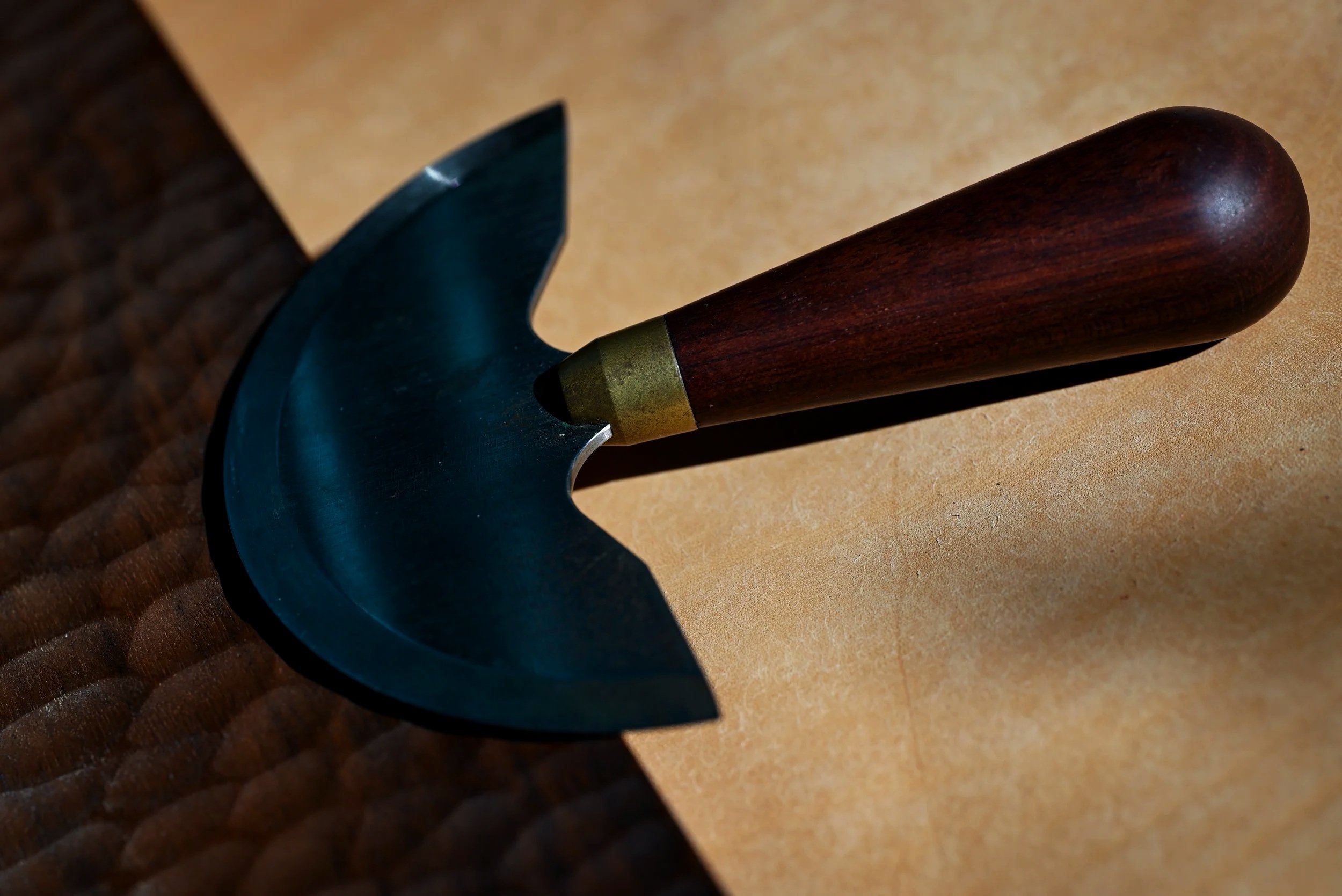
2. The half-moon knife
Emblématique de la maroquinerie, reconnaissable entre mille à sa forme arrondie, il vient de la sellerie, où il servait à découper avec précision des cuirs épais. Avec un mouvement de balancier, je coupe le cuir net. Sa forme permet aussi bien les découpes droites que les arrondis.
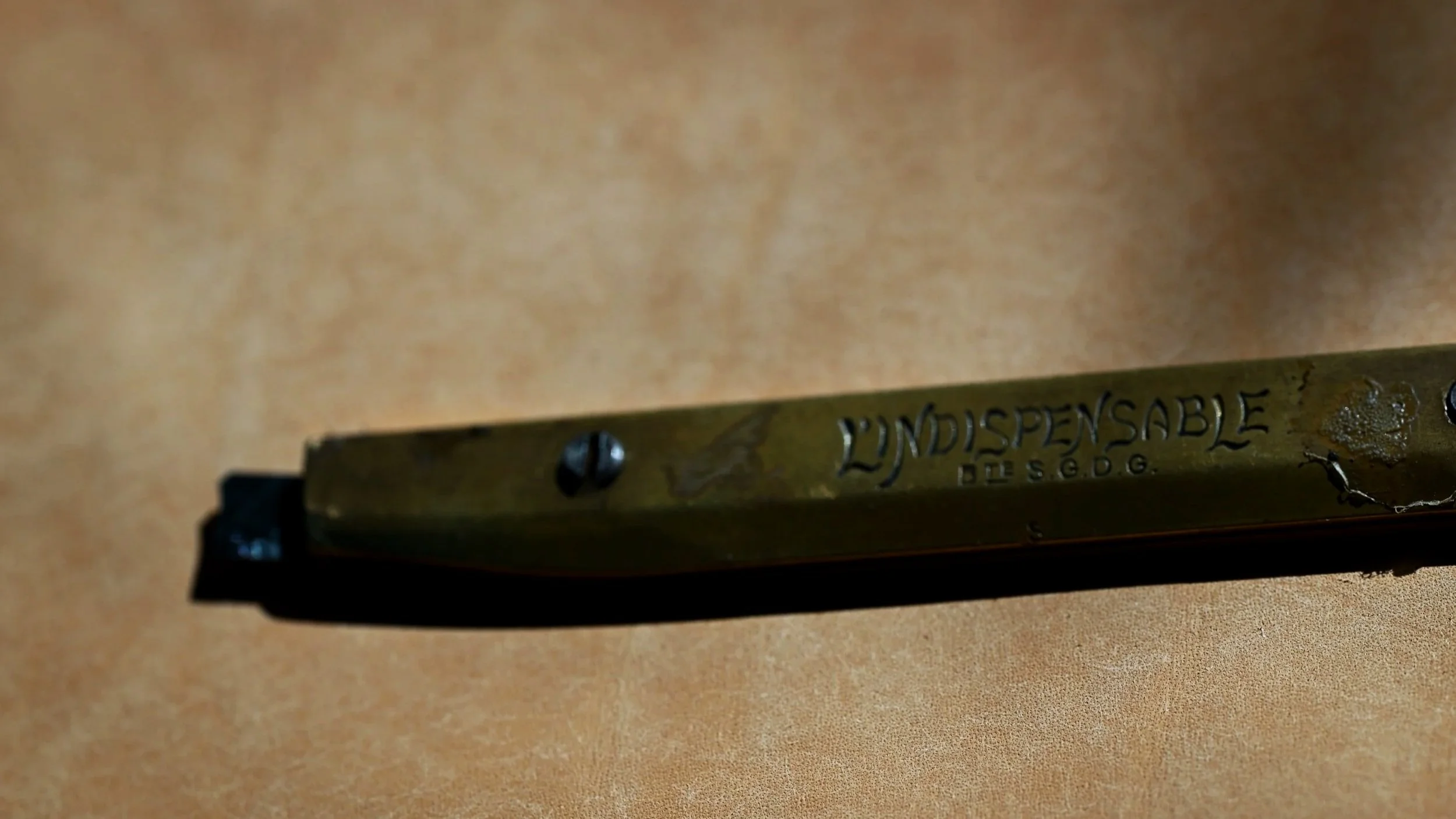
3. The Essentials
Comme son nom l'indique, « l'Indispensable » est le compagnon de tout maroquinier. Il sert à découper le cuir rapidement et proprement, notamment pour les petits détails.
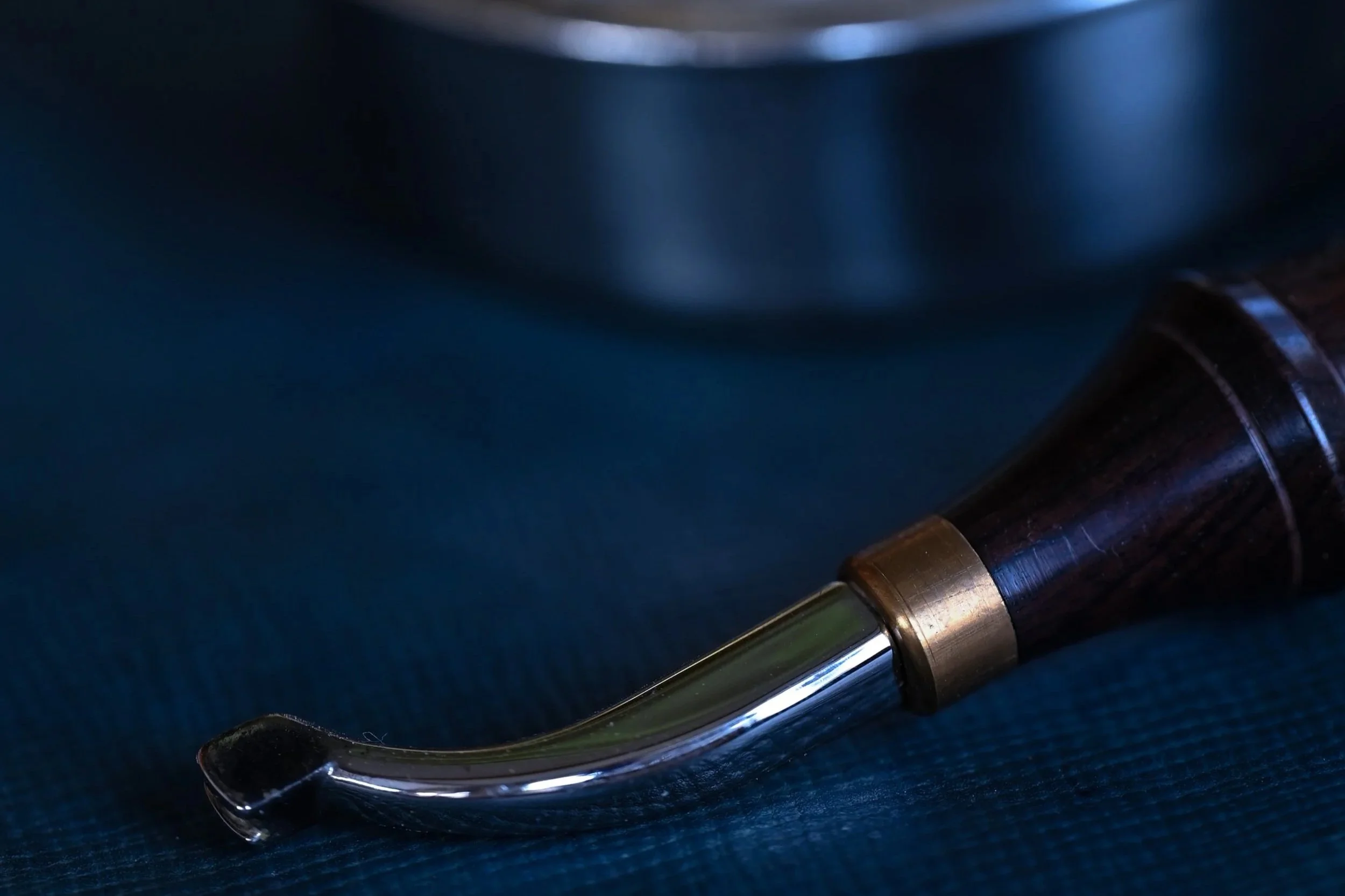
4. The leatherworker's net
Chauffé au-dessus d'une flamme, il trace une fine ligne décorative le long des bords du cuir. On l'utilise depuis longtemps pour « signer » les finitions, et il consolide au passage le collage des pièces assemblées.
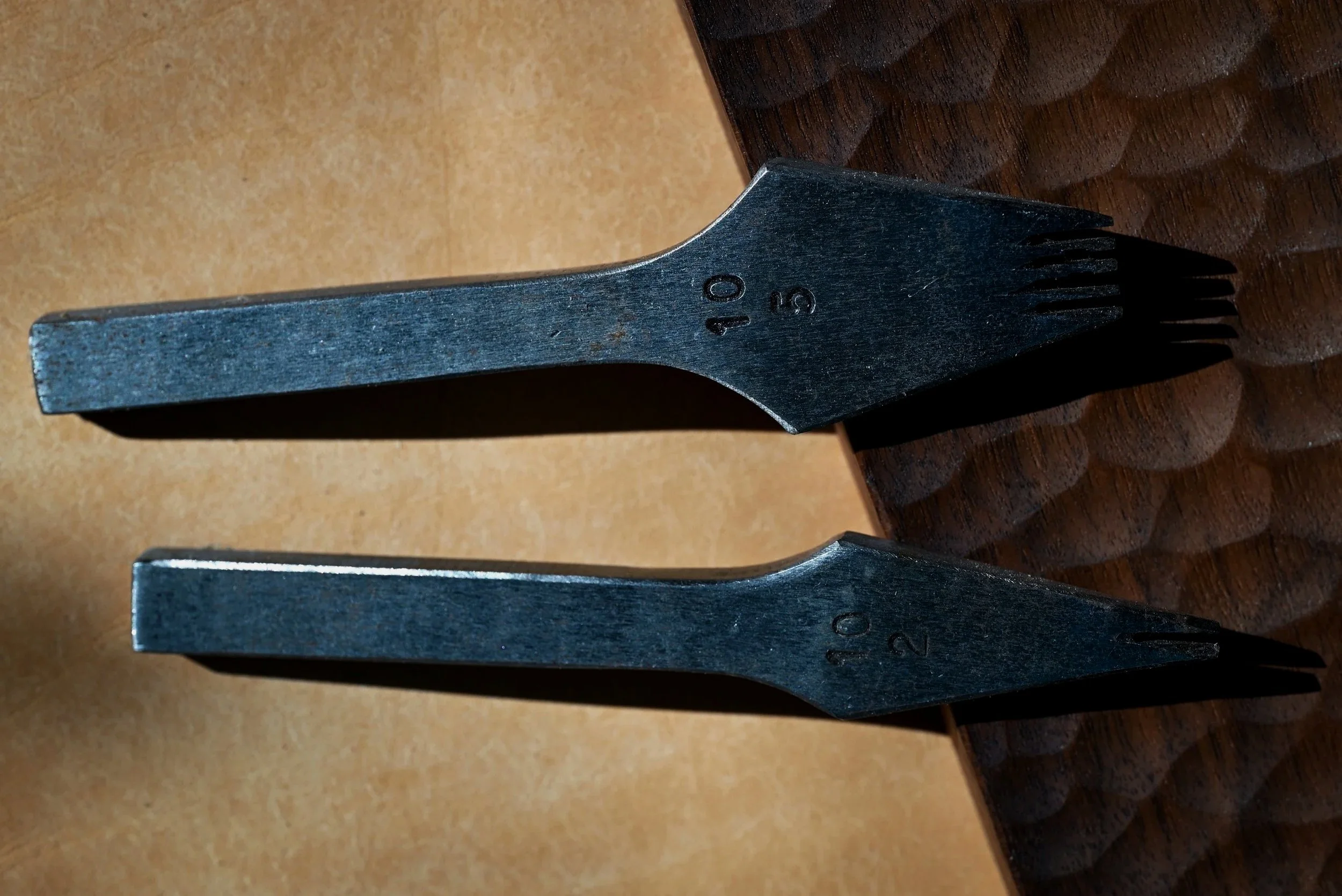
5. Stamping claws
Avant de coudre, il faut préparer la ligne de couture. Posées sur le cuir puis frappées au maillet, les griffes impriment de petites marques régulières qui guideront l'alêne et l'aiguille. Héritées de la couture sellier, elles garantissent un espacement parfait, celui qui faisait la solidité des selles de chevaux.
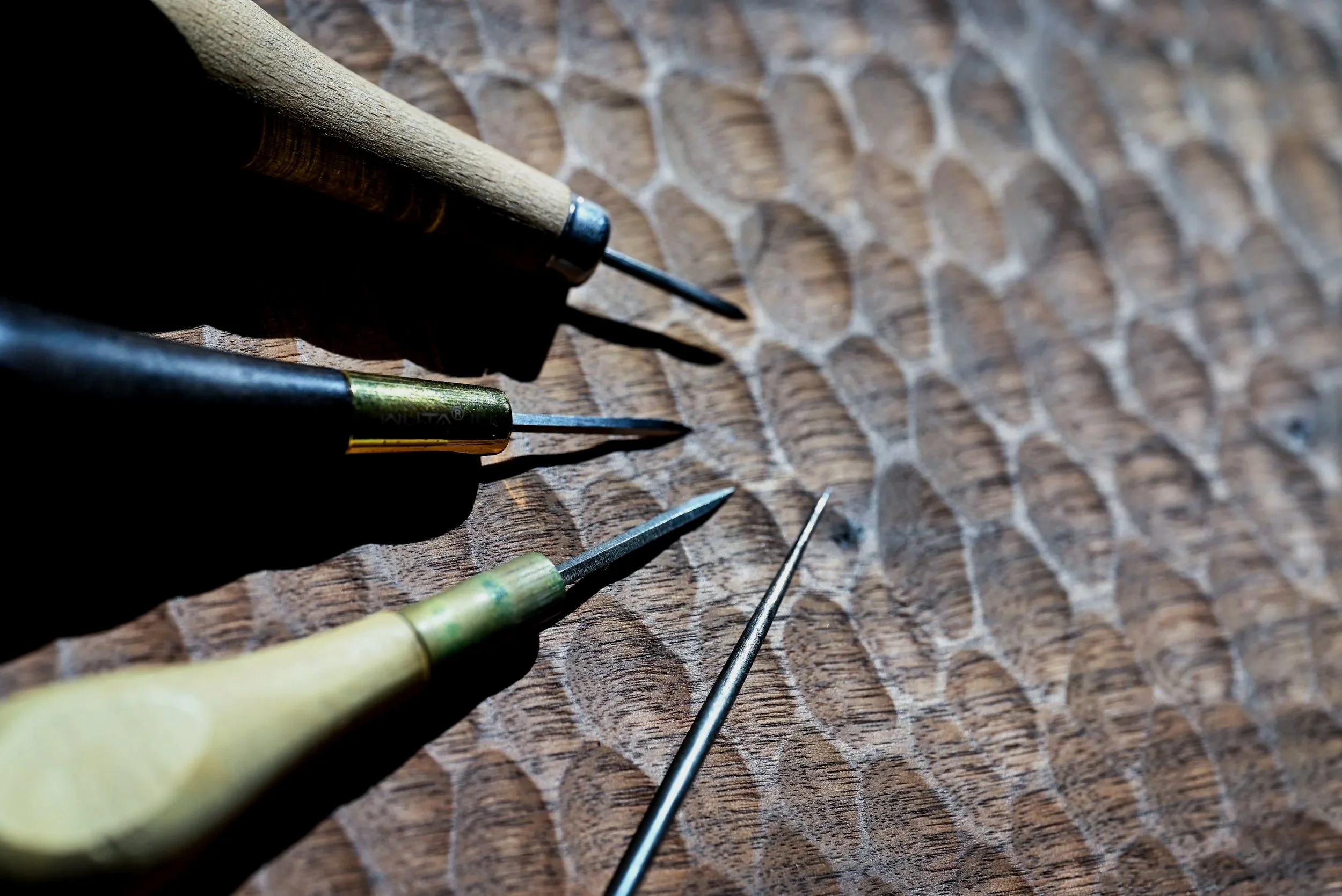
6. The awl
Impossible d'imaginer la couture sellier sans elle. L'alêne perce le cuir avant le passage de l'aiguille, et prépare ainsi une couture nette et solide.
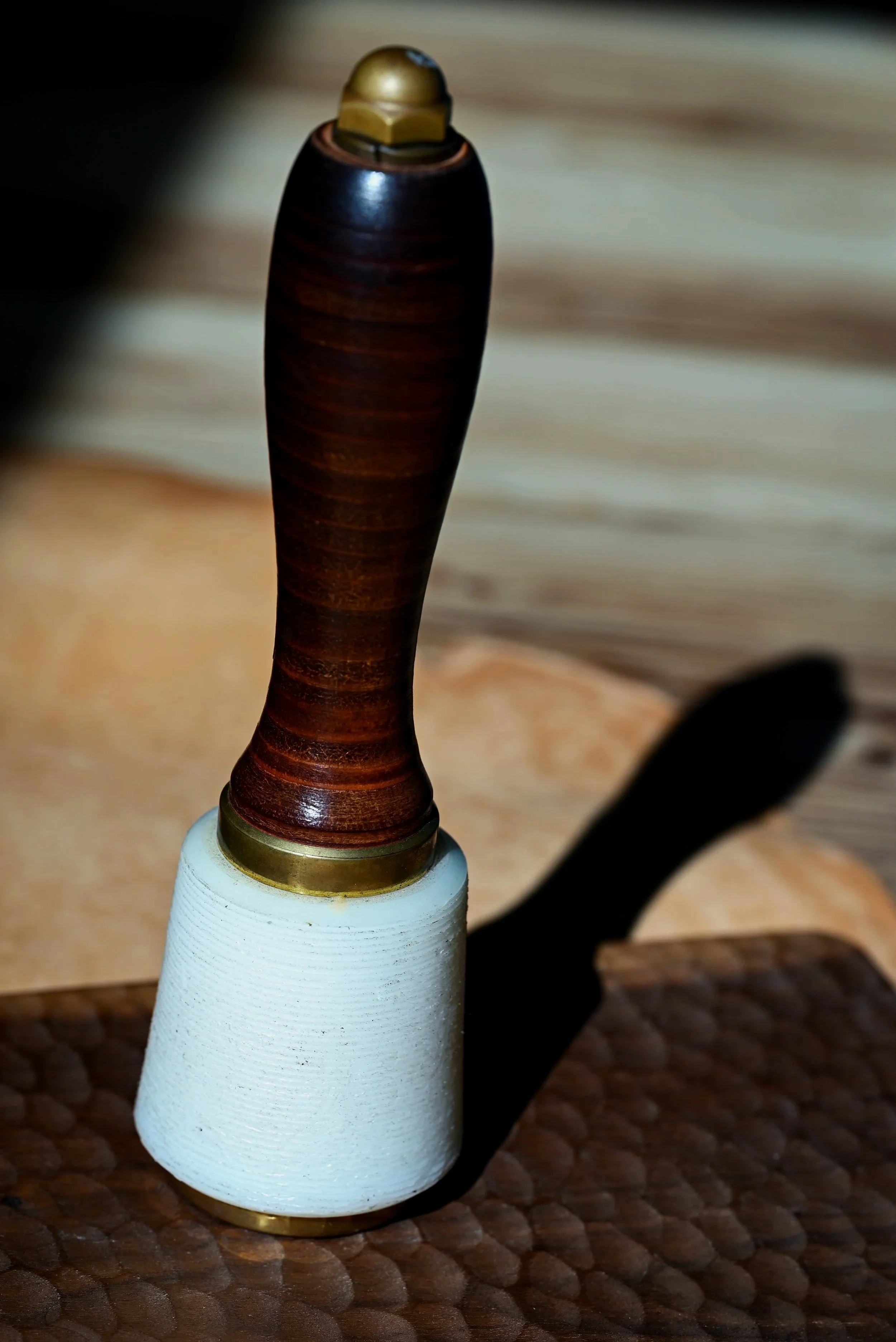
7. The mallet
Il s'utilise avec les griffes, les emporte-pièces ou les outils d'embossage, et permet de frapper sans abîmer les outils ni marquer le cuir. Déjà présent dans les ateliers des selliers médiévaux, il n'a quasiment pas changé depuis.
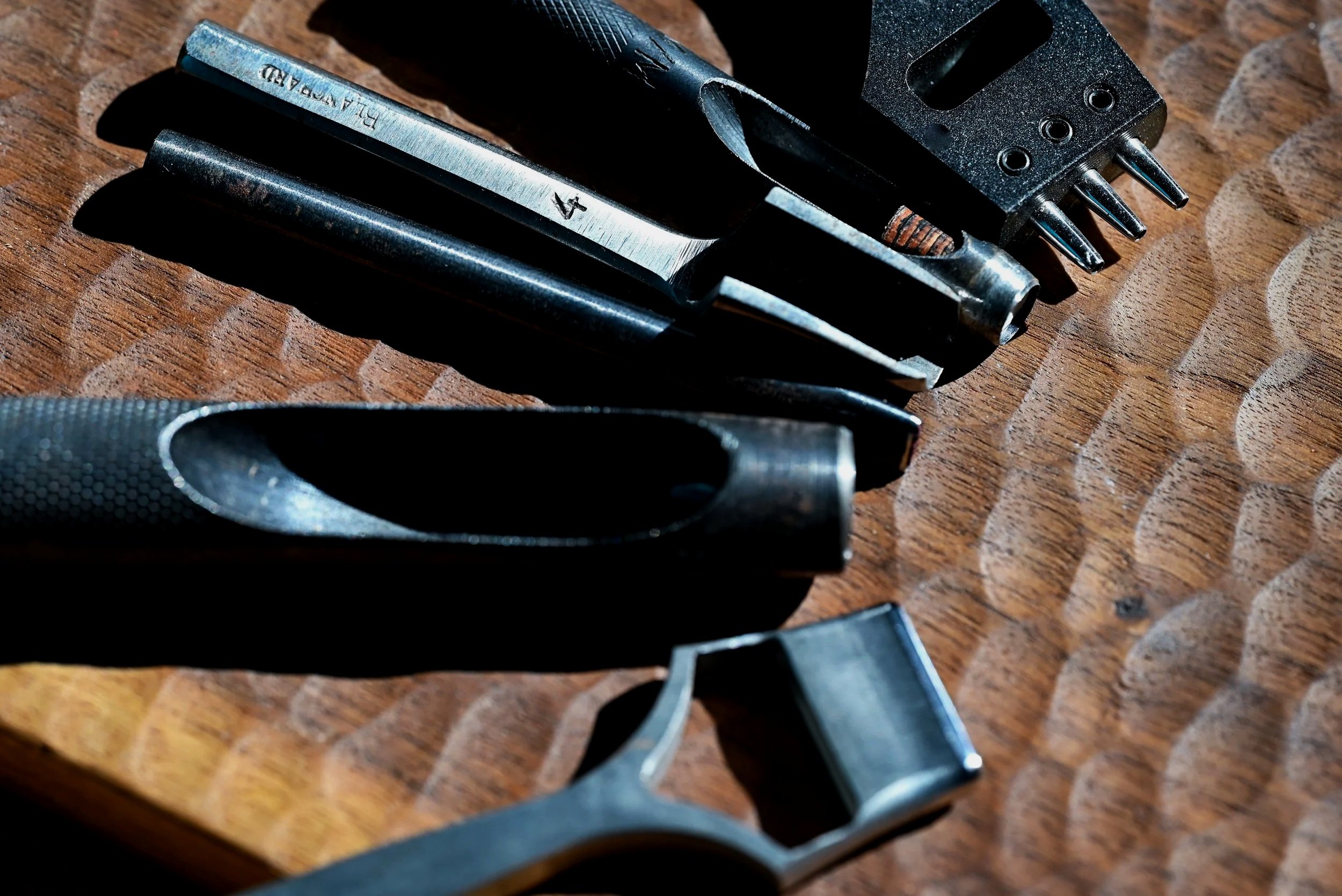
8. Cookie cutters
Ronds, ovales ou rectangulaires, ils permettent de percer des trous propres et réguliers. Ils sont essentiels pour poser les boucles, les rivets ou les lanières.
9. Corner rounders
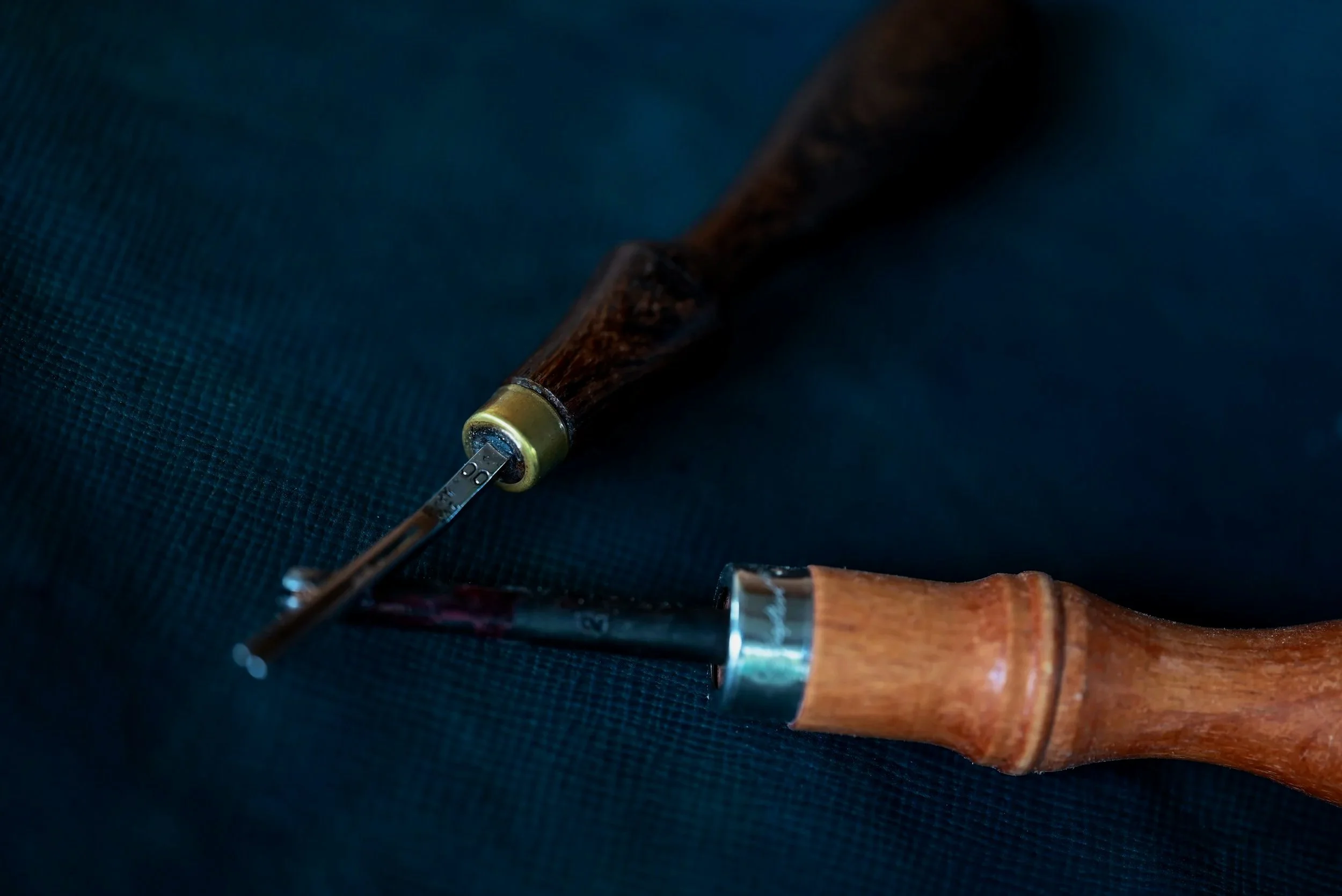
Des outils peu connus, mais précieux : ils servent à chanfreiner, c'est-à-dire à adoucir les arêtes du cuir. On obtient une tranche arrondie, plus agréable au toucher, et qui vieillit mieux.
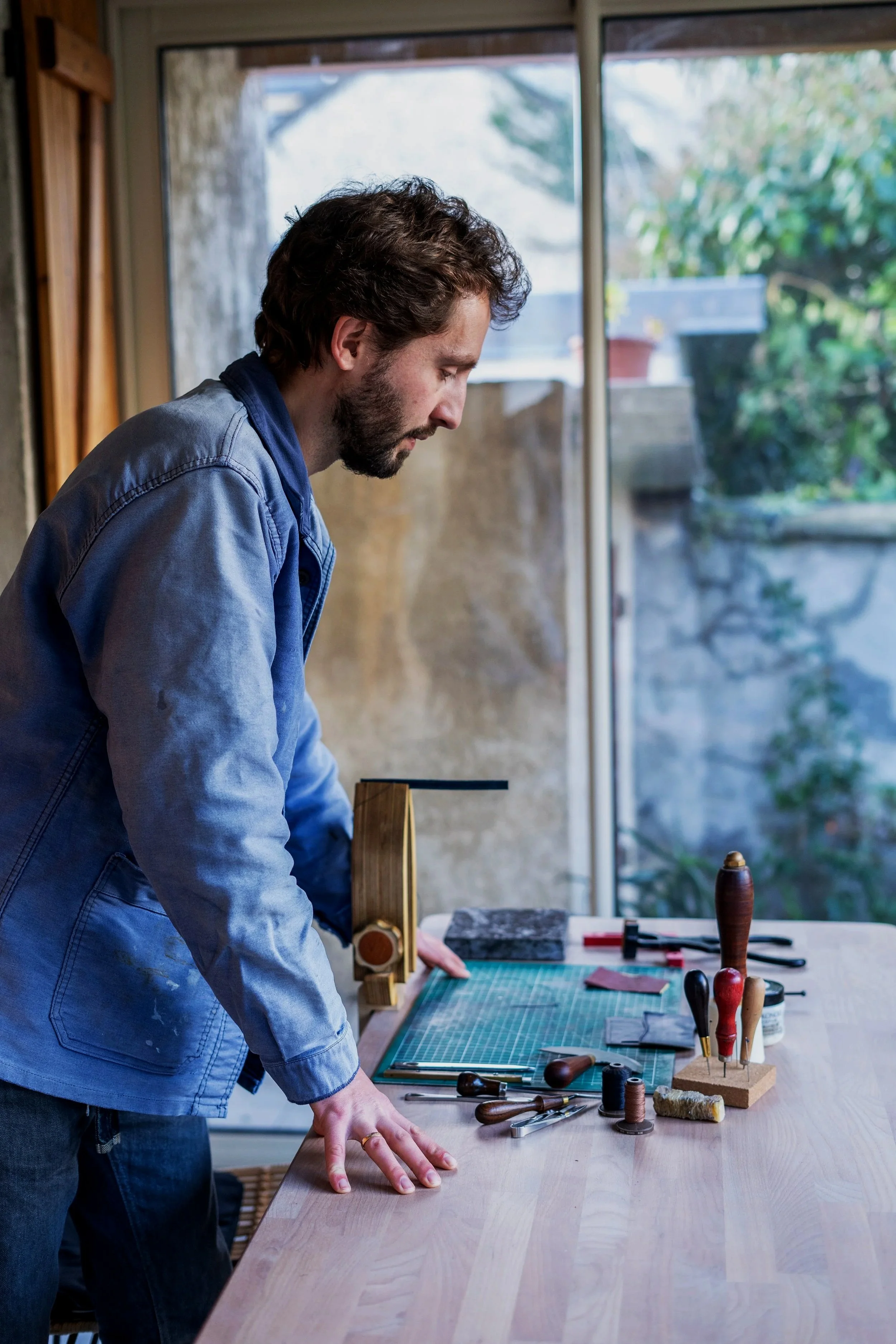
Certains de ces outils n'ont pas changé depuis des siècles. C'est peut-être ce qui me plaît le plus : les gestes qu'ils imposent se transmettent d'atelier en atelier, et aucune machine ne les remplace vraiment.
