
La couture est ce qui fait tenir une pièce dans le temps : c'est elle qui garantit sa solidité. Voici les outils que j'utilise pour coudre, et la technique qui fait la fierté des maroquiniers français : le point sellier.
Essential sewing tools
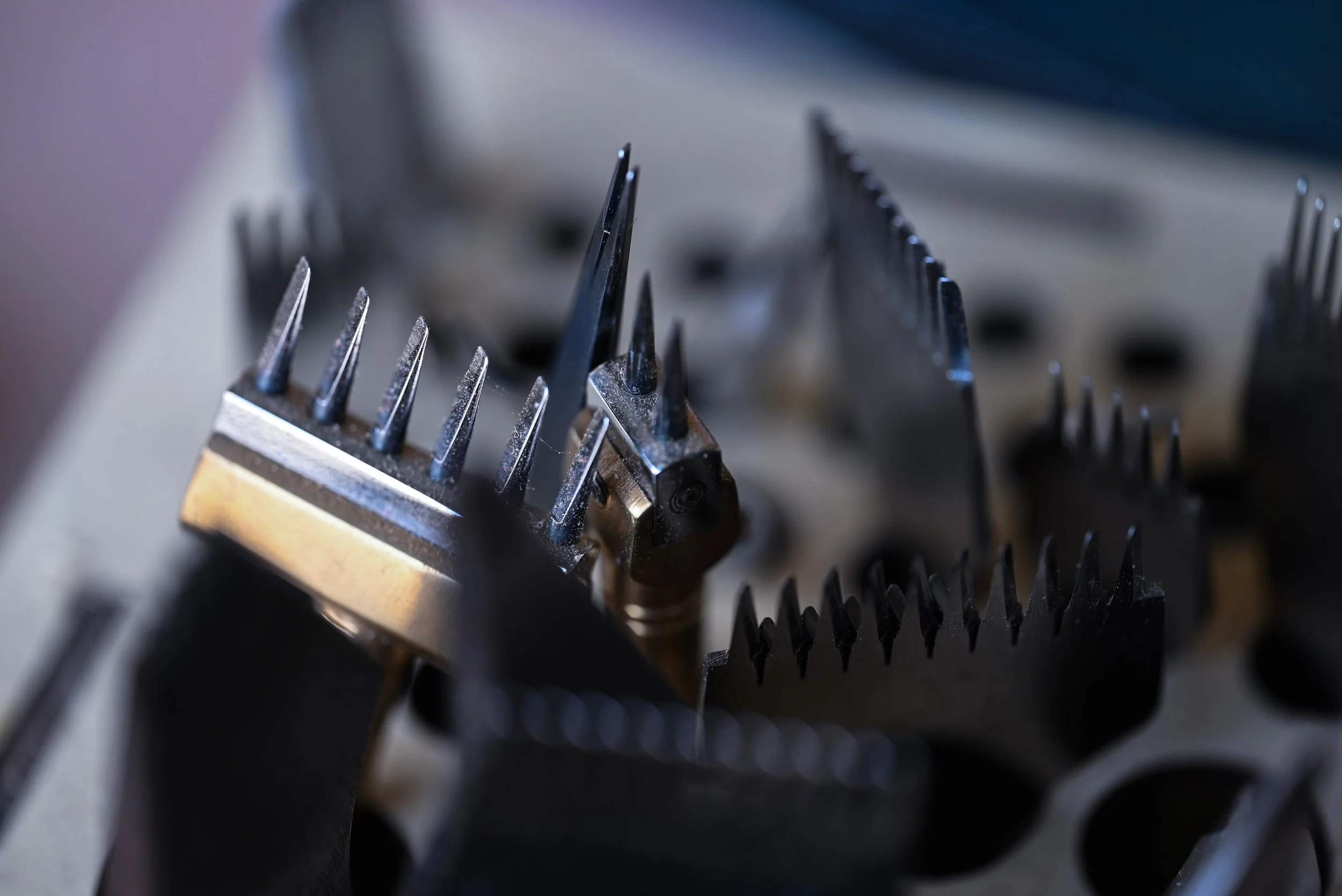
The claws
Avant même de coudre, il faut préparer. Les griffes marquent le cuir d'un alignement de petites empreintes régulières : c'est cette régularité qui donnera à la couture sa ligne parfaite.
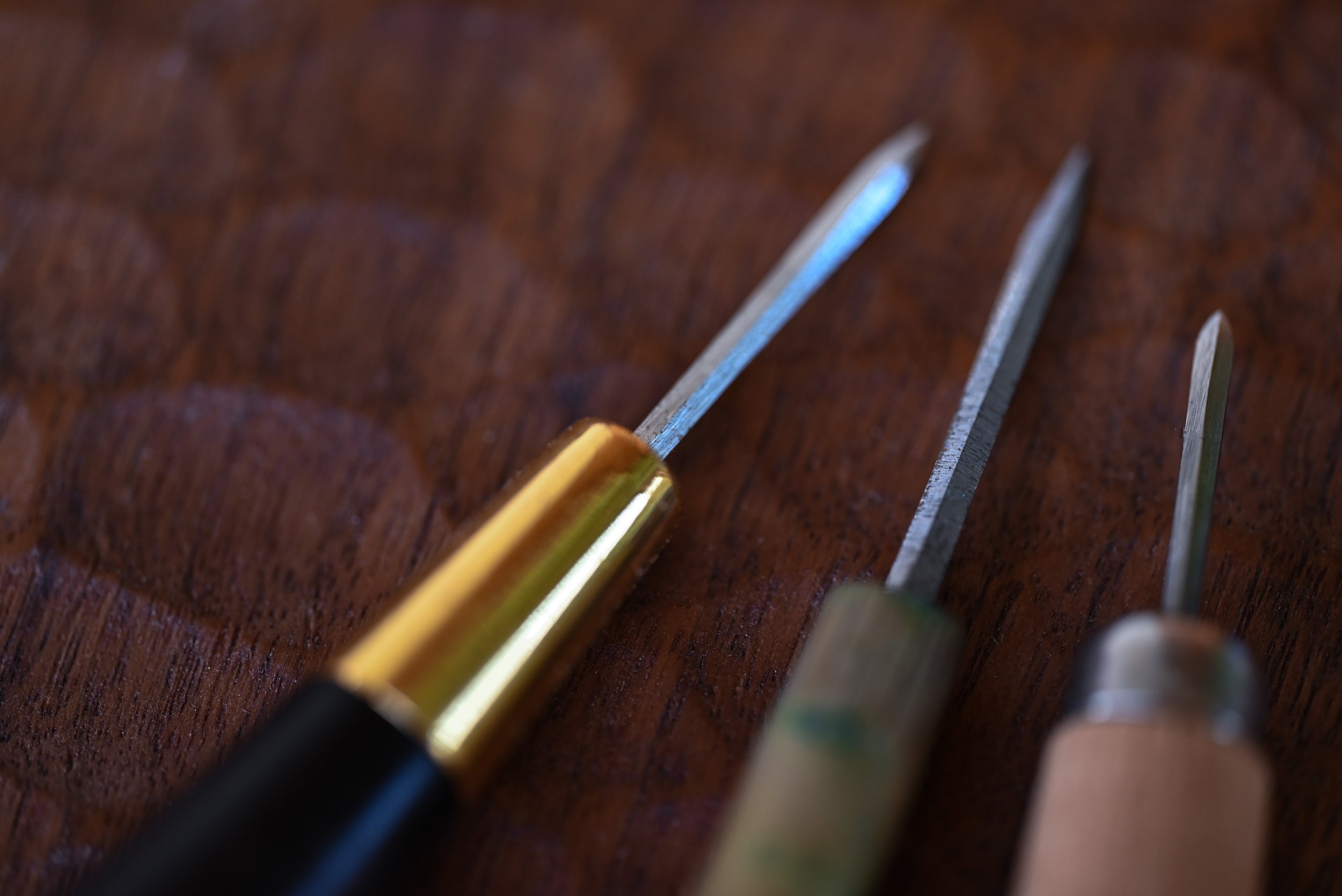
The awl
Outil à la pointe fine et acérée, l'alêne perce le cuir au niveau des marques laissées par les griffes. Sa pointe en losange crée une ouverture adaptée au passage du fil, sans abîmer les fibres du cuir.
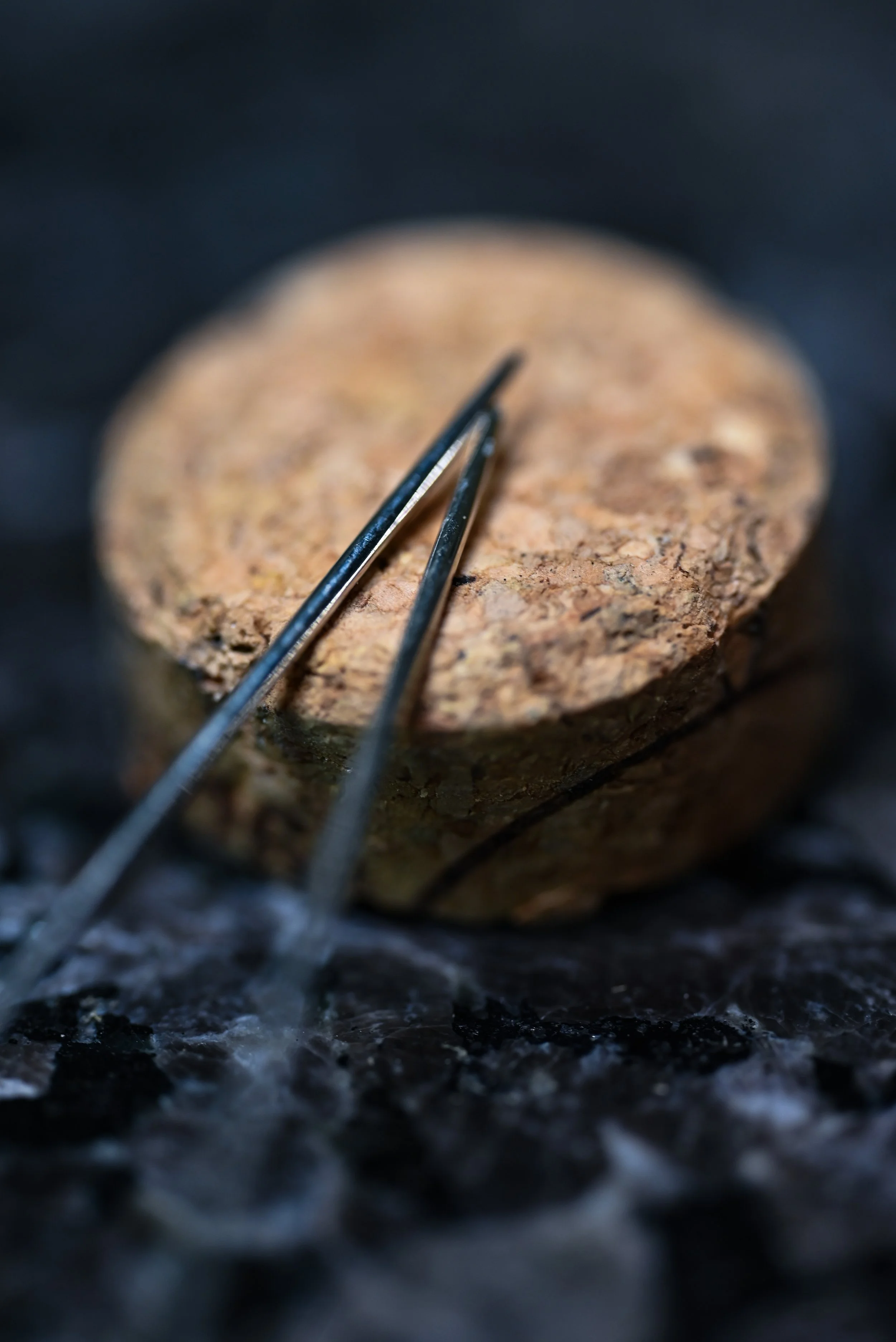
The needles
Contrairement aux aiguilles classiques, celles de la maroquinerie n'ont pas de pointe tranchante : c'est l'alêne qui perce. Elles guident simplement le fil, sans risque d'endommager le cuir. Pour le point sellier, on en utilise deux en même temps.
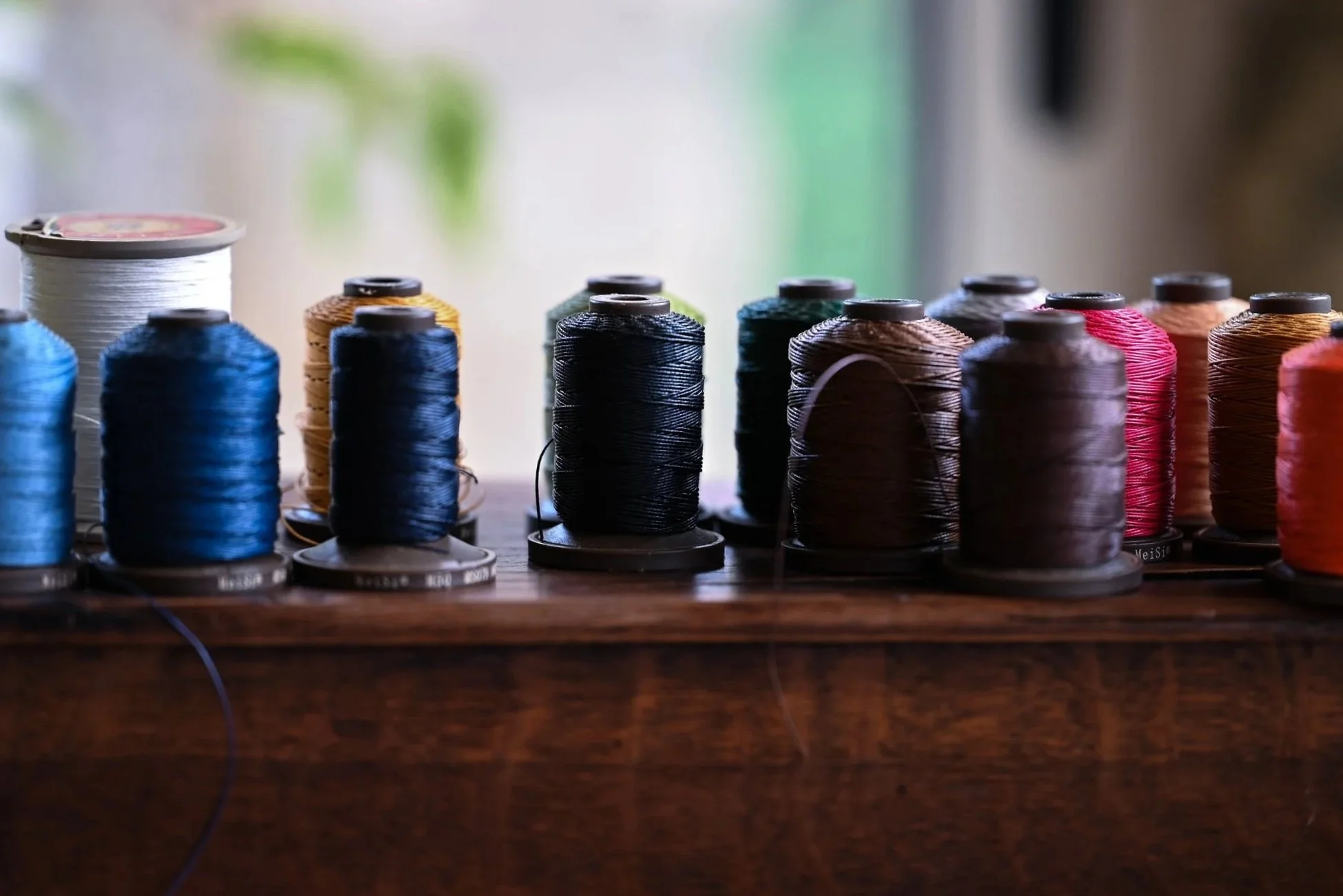
The thread
J'utilise du fil de lin, que je cire à la cire d'abeille avant la couture. Il doit être résistant et légèrement rigide pour bien se tenir.
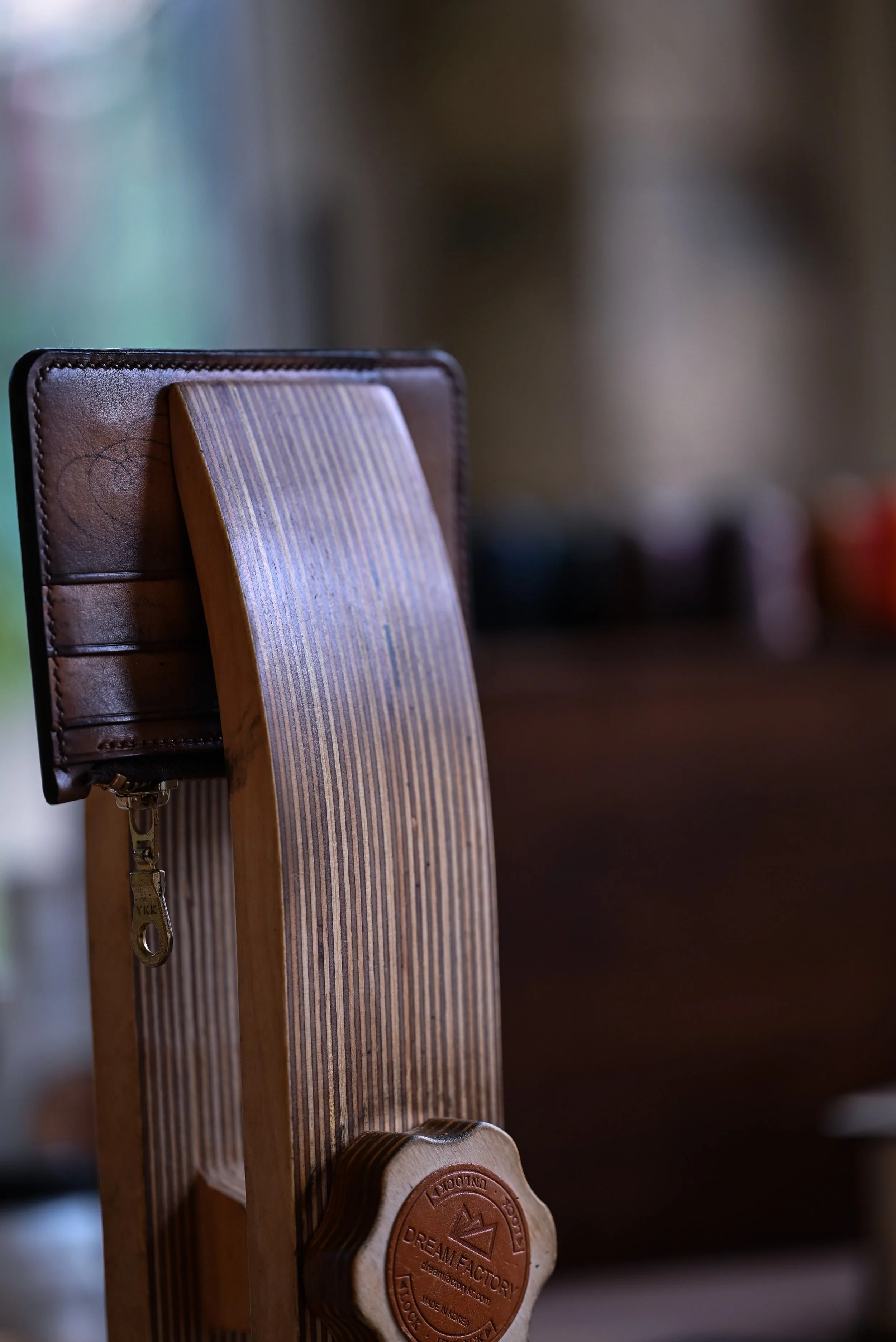
The sewing clip
Impossible de tenir le cuir d'une main et de coudre de l'autre. La pince à coudre, ou valet de couture, maintient fermement la pièce en place, et libère mes deux mains pour travailler avec les deux aiguilles.
Le point sellier, l'emblème de la maroquinerie française
Le point sellier est né dans les ateliers de sellerie, à une époque où la solidité d'une couture était une question de sécurité : une sangle qui lâchait pouvait faire chuter un cavalier. Il est devenu depuis l'emblème de la maroquinerie artisanale française.
Il se réalise entièrement à la main, avec deux aiguilles et un seul fil. Chaque aiguille passe alternativement dans le même trou, en sens opposé. Le point se verrouille ainsi sur lui-même et devient quasiment impossible à défaire.
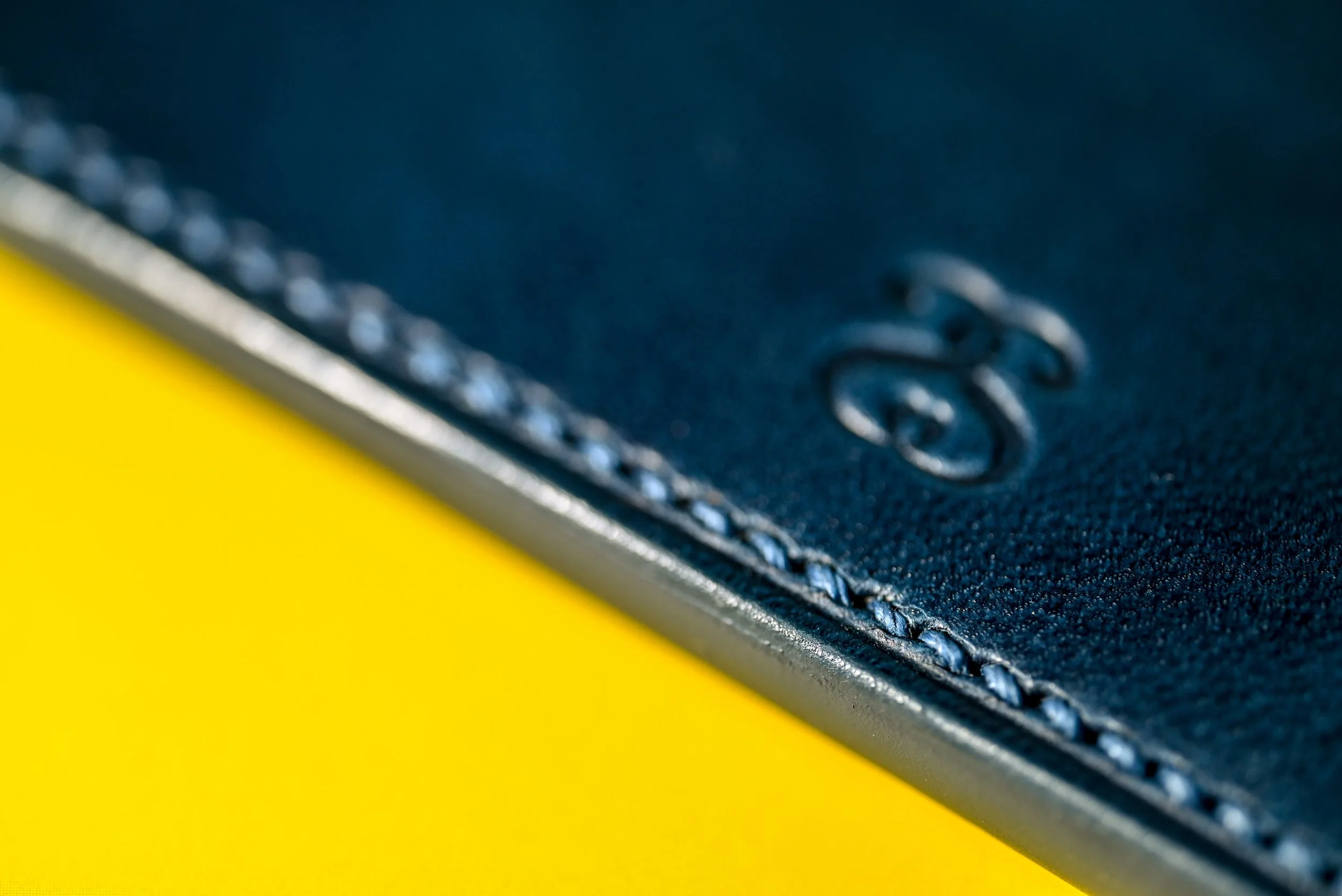
Its advantages:
La solidité : bien souvent, c'est le cuir qui cédera avant la couture.
L'esthétique : un point régulier, fin, reconnaissable au premier regard.
La durabilité : contrairement à la couture machine, qui file entièrement si le fil est sectionné, le point sellier reste en place même lorsqu'un point est abîmé.
