
La patine raconte l'histoire du cuir, et celle de la personne qui le porte. Je la travaille comme une signature. Mais avant de parler de ma technique, il faut rappeler une chose : même sans intervention, le cuir sait déjà se transformer tout seul.
La patine du cuir
Le cuir est une matière vivante, sensible à son environnement et à l'usage quotidien. Avec les années, il évolue et se patine naturellement, sous l'effet de plusieurs facteurs :
La lumière du soleil, qui fonce progressivement les zones les plus exposées
Les frottements : les zones sollicitées s'assombrissent, se lissent et gagnent en brillance
L'usage quotidien : la poussière, le contact des mains participent eux aussi à l'évolution des teintes
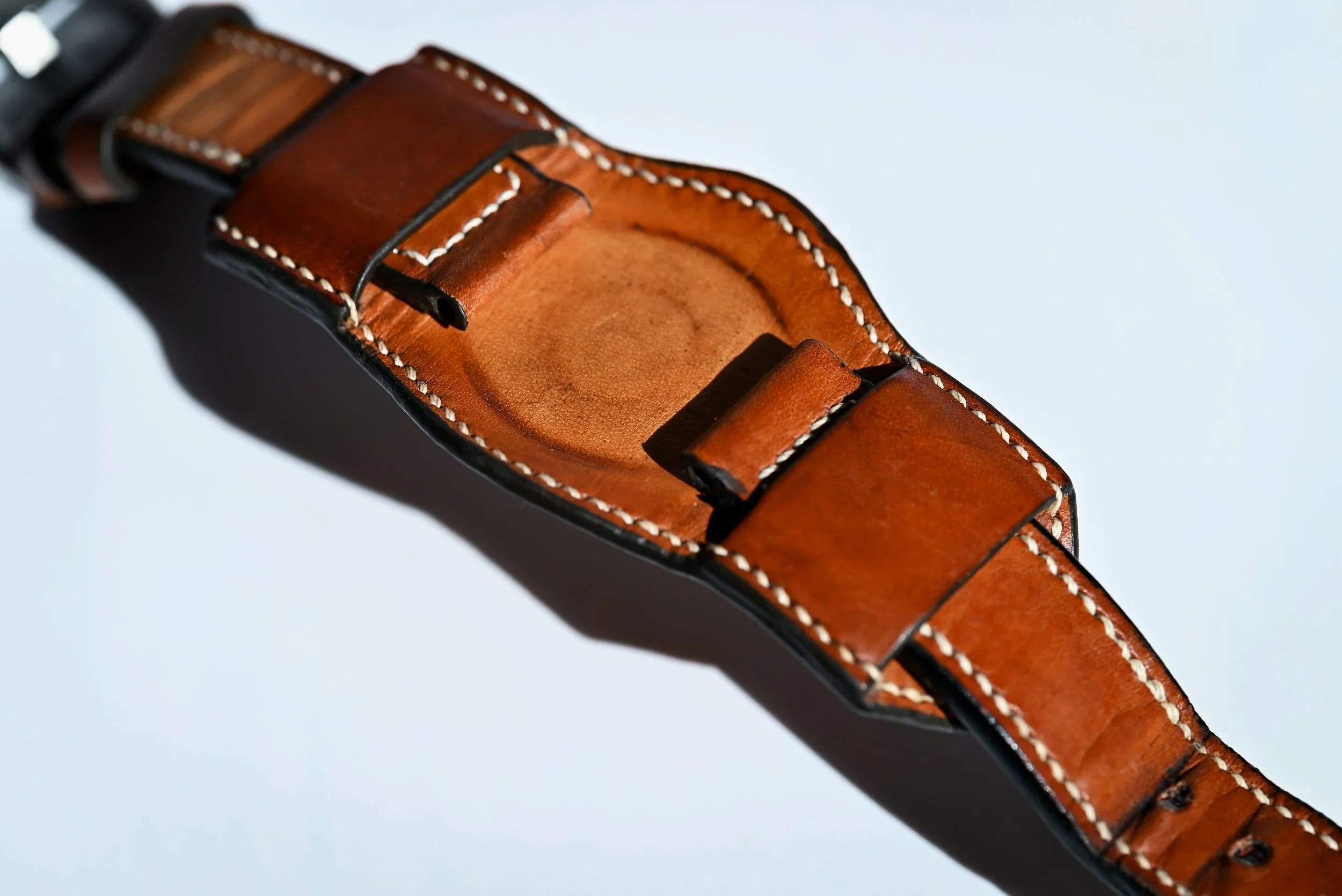
Un bracelet en cuir tanné végétal que j'ai réalisé il y a quelques années, et qui a pris une belle patine naturelle.
My traditional patina technique
En prenant pour modèle la manière dont vieillissent les matières : le bois, la pierre, le cuir lui-même, j'ai développé à l'atelier ma propre technique de patine.
Elle consiste à transformer un cuir brut, clair et uniforme, en une pièce pleine de nuances et de profondeur : en superposant de fines couches de teinture, on obtient des tons qu'aucune teinture industrielle ne peut donner.
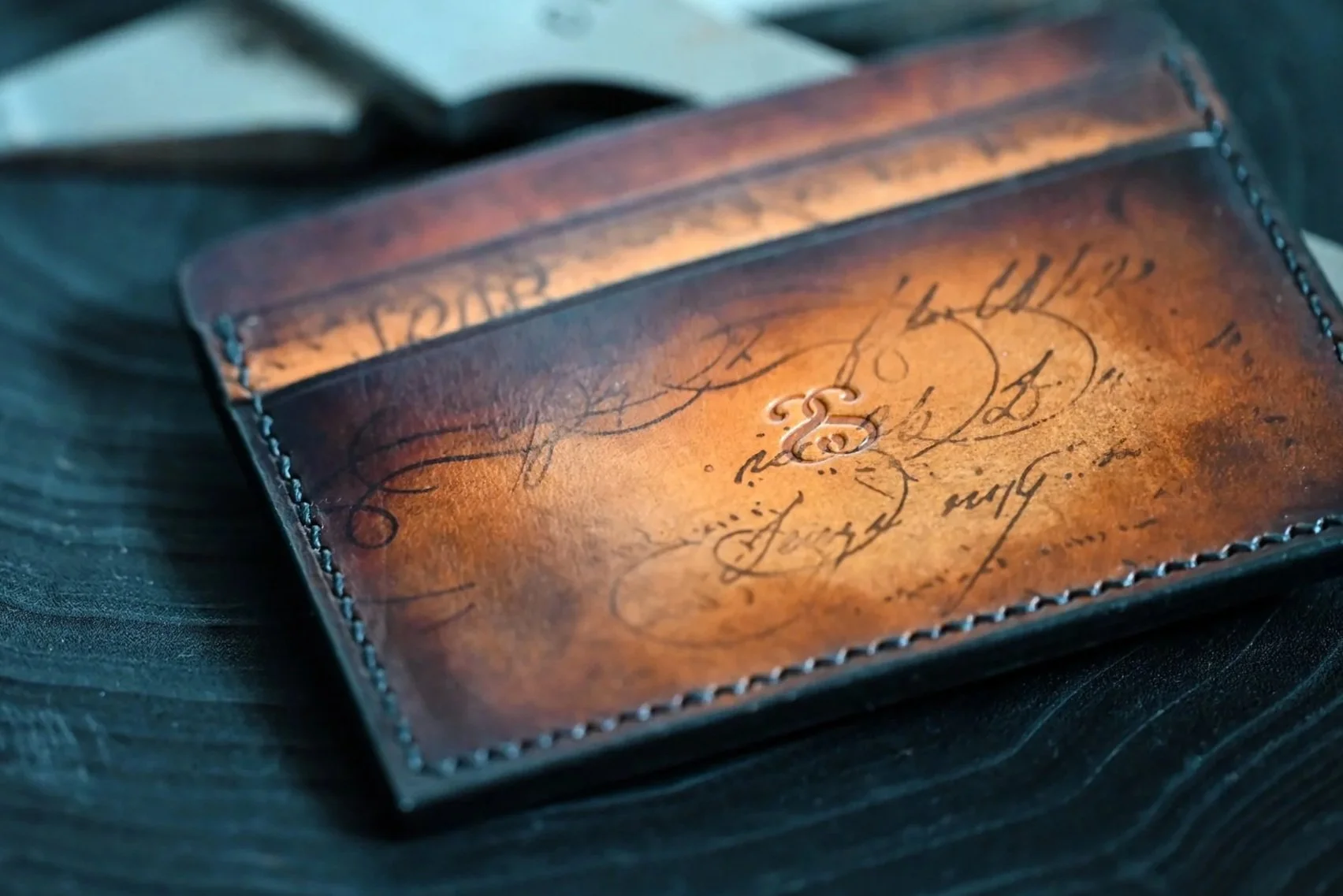
Un travail minutieux, en cinq étapes
1. Préparer le cuir
Avant toute application, je nettoie le cuir en profondeur. Ce travail ouvre la fibre et élimine les impuretés. Pour les cuirs les plus gras, j'utilise un produit spécifique qui retire l'excédent d'huile : sans cela, la teinture « glisse » et le résultat manque d'homogénéité.
2. Choisir le matériel
Chaque patine est une expérience. Je sélectionne les teintures selon les nuances recherchées, et je crée parfois mes propres mélanges pour atteindre la teinte voulue. J'utilise pour cela :
des chiffons en coton, pour tamponner le cuir et créer les dégradés
des pinceaux fins, pour les détails et les finitions
un aérographe, pour les teintes homogènes
des éponges de différentes tailles, pour les effets de matière
des teintures conçues pour le cuir, et un vernis appliqué une fois la teinture sèche, pour fixer la couleur
3. Appliquer les couches de teinture
La patine se construit par superpositions successives : je teins, je laisse sécher, puis je reprends. Chaque passage enrichit la profondeur de la couleur et fait apparaître de nouvelles nuances.
4. Fixer et révéler les couleurs
Une fois la teinture aboutie et parfaitement sèche, je nettoie délicatement la surface pour éliminer l'excédent, puis j'applique un vernis adapté qui stabilise les couleurs.
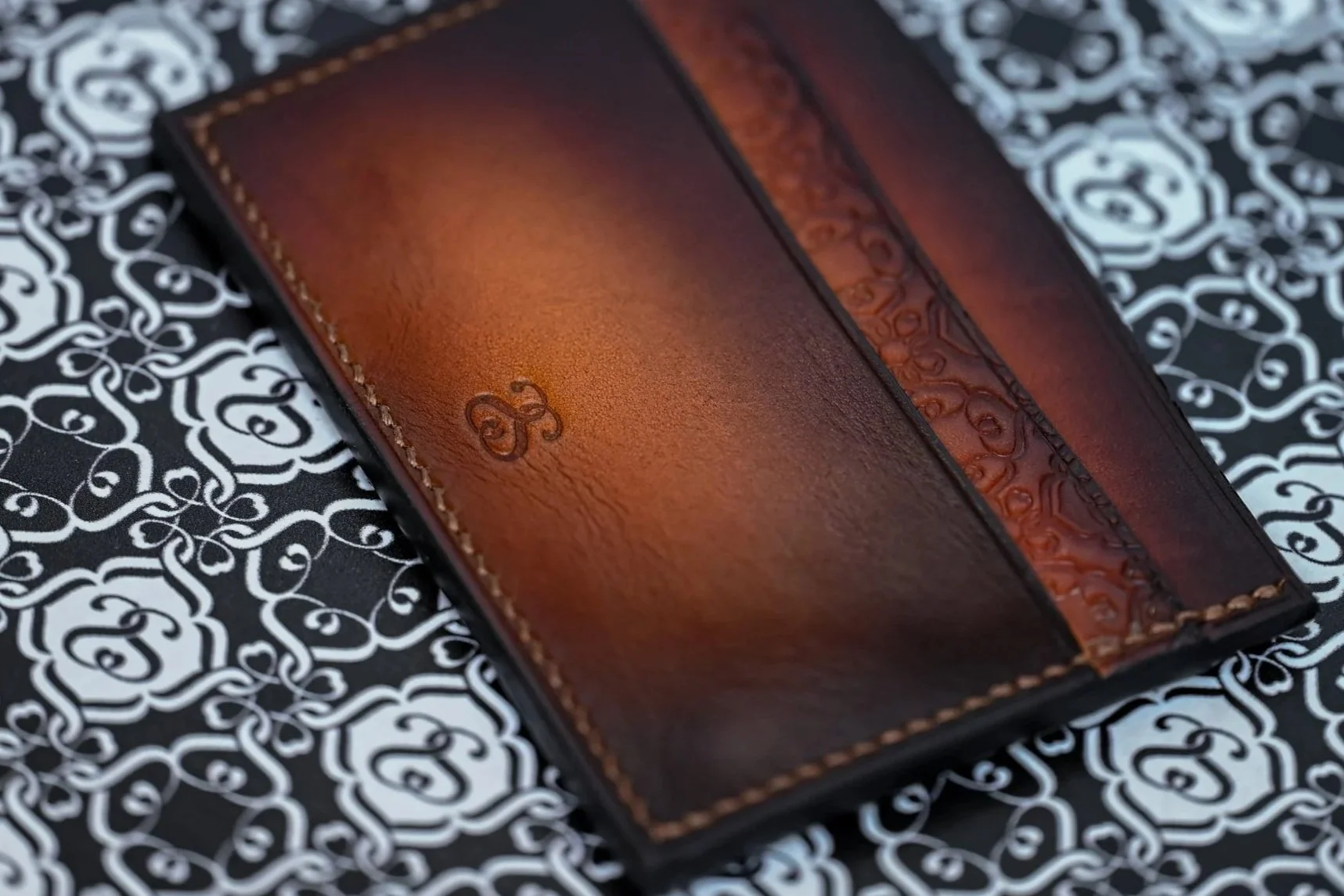
5. Nourrir et faire briller
Enfin, j'applique en profondeur un baume nourrissant, qui rend au cuir souplesse et vitalité. Après séchage, je frotte vigoureusement la surface avec une brosse douce : le cuir s'illumine et révèle l'éclat de la patine.
6. Nourish and add shine
Finally, I deeply nourish the leather with a balm that restores its suppleness and vitality. Once dry, I buff it vigorously with a soft brush: the surface glows, and the patina reveals its full depth.
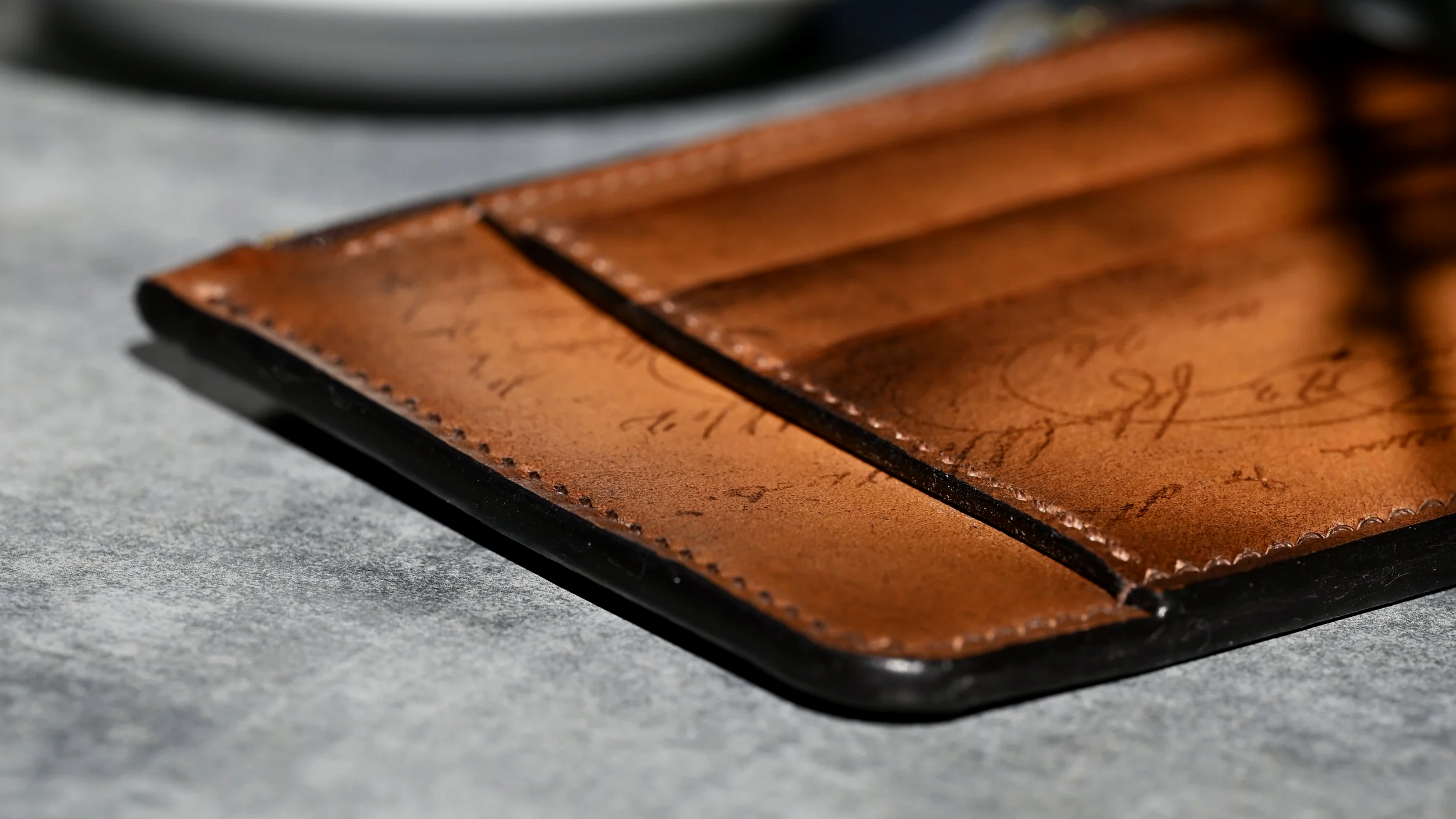
The uniqueness of each piece
Deux patines ne sont jamais identiques : chaque objet est une pièce unique. Et elle continuera d'évoluer entre vos mains, car la patine naturelle prendra le relais de la mienne.
