
Quand je commence un article de maroquinerie, je ne choisis pas seulement un design : je choisis une matière. Et ce choix est déterminant, car chaque cuir est différent.
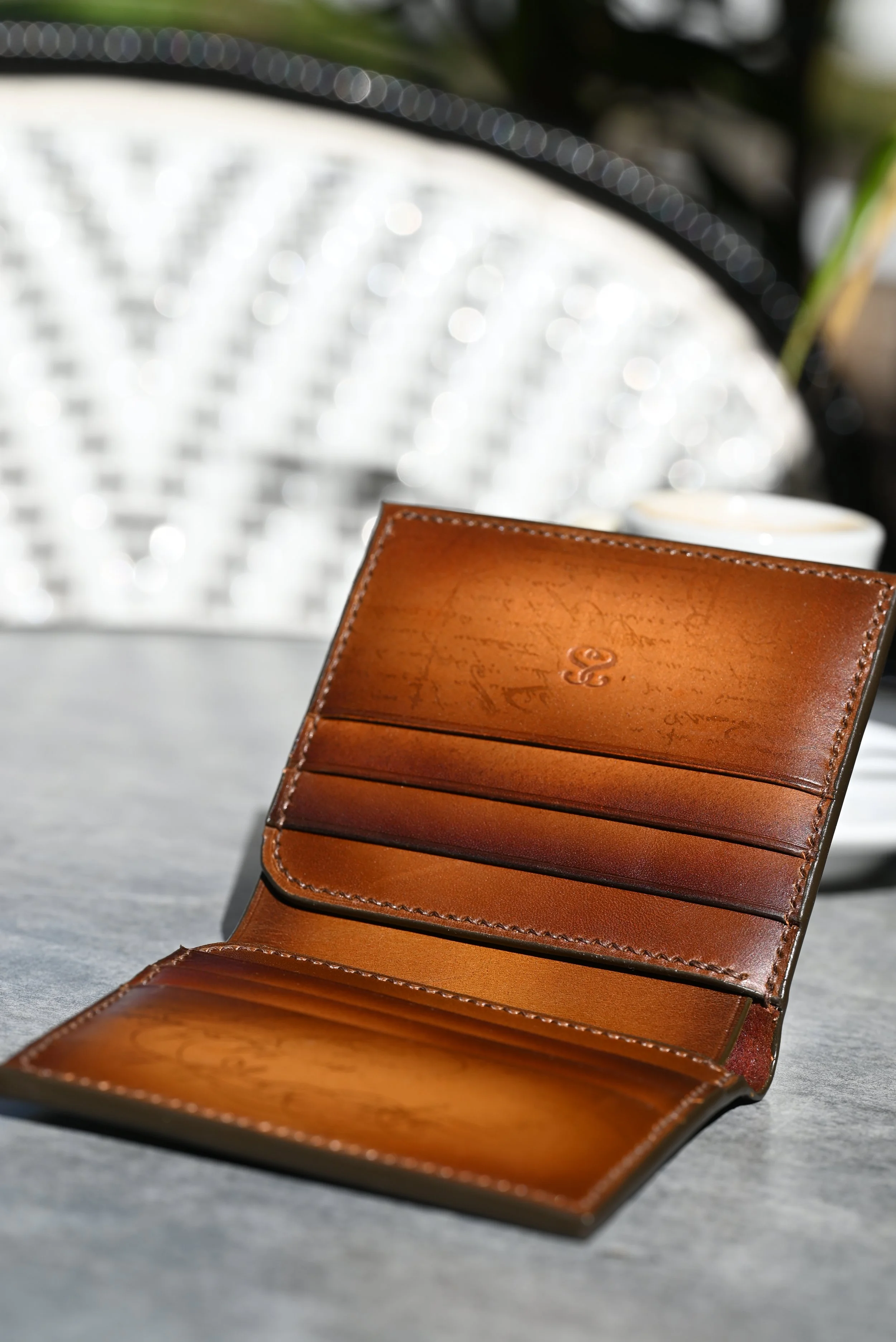
Voici un cuir issu d’une tannerie française avec laquelle je collabore fréquemment. Un grain léger, une texture lisse et une très bonne capacité à absorber la teinte.
La pleine fleur, d'abord
Je travaille en pleine fleur, c'est-à-dire avec la surface naturelle du cuir, non poncée. Elle conserve le grain d'origine et les fines marques laissées par la vie de l'animal et c'est elle qui développe les plus belles patines.
Un cuir dont la fleur a été « corrigée » est plus uniforme, mais il a perdu une partie de son caractère et de sa résistance.
Les caractéristiques que je recherche
La fermeté : certains cuirs sont souples et conviennent aux articles qui demandent de la flexibilité. D'autres sont fermes et donnent leur tenue aux pièces structurées. Tout dépend de l'usage de l'objet et du rendu recherché.
L'épaisseur : un cuir épais sera plus robuste, un cuir fin se prête aux petites pièces élégantes, mais demande davantage de précision.
La capacité à absorber la teinture : le cuir à tannage végétal a une fibre ouverte, qui permet une teinture profonde et nuancée idéale pour mes patines. Chaque peau reste différente, avec des pores plus ou moins resserrés : chaque détail compte.
La capacité à se patiner : à l'usage, la couleur d'un bon cuir se réchauffe et sa brillance se développe. Certains cuirs s'embellissent plus vite que d'autres.
Features of the tannery
Le cuir se juge aussi à sa provenance et au savoir-faire de la tannerie. Deux critères comptent particulièrement pour moi.
Le respect de la condition animale : un cuir de qualité provient d'une filière où les bêtes sont bien traitées, et où les peaux sont récupérées comme coproduits de l'alimentation jamais produites au détriment de l'animal.
La qualité du tannage : il existe plusieurs procédés, mais le tannage végétal reste le plus authentique. Il utilise des extraits naturels de plantes et d'écorces, et c'est lui qui donne au cuir sa capacité à évoluer dans le temps.
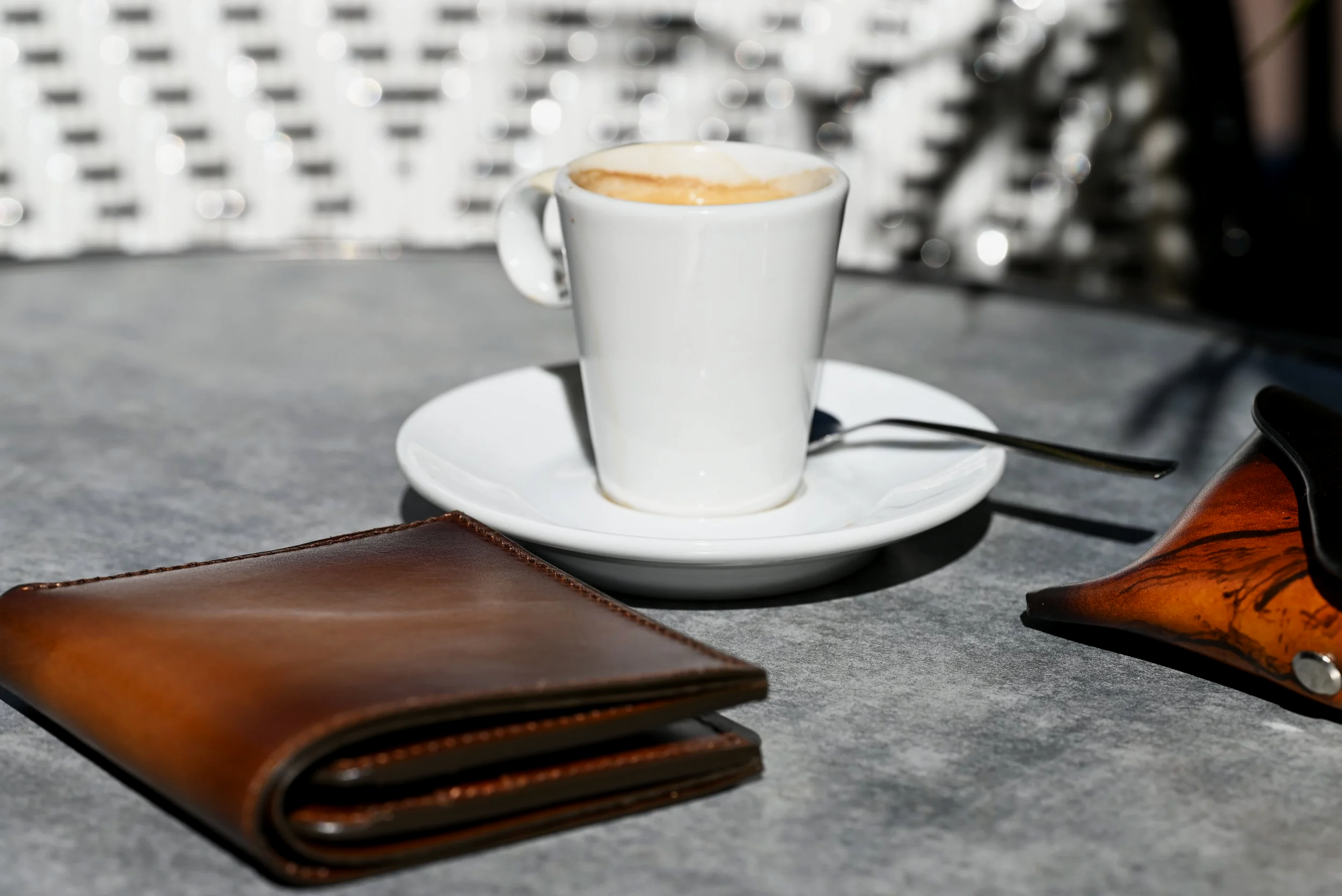
D'ailleurs, quand je reçois un nouveau cuir, la première chose que je fais est de le sentir. Un cuir bien tanné au végétal dégage des senteurs très reconnaissables : on perçoit parfois le chêne, le mimosa, ou d'autres plantes utilisées lors du tannage.
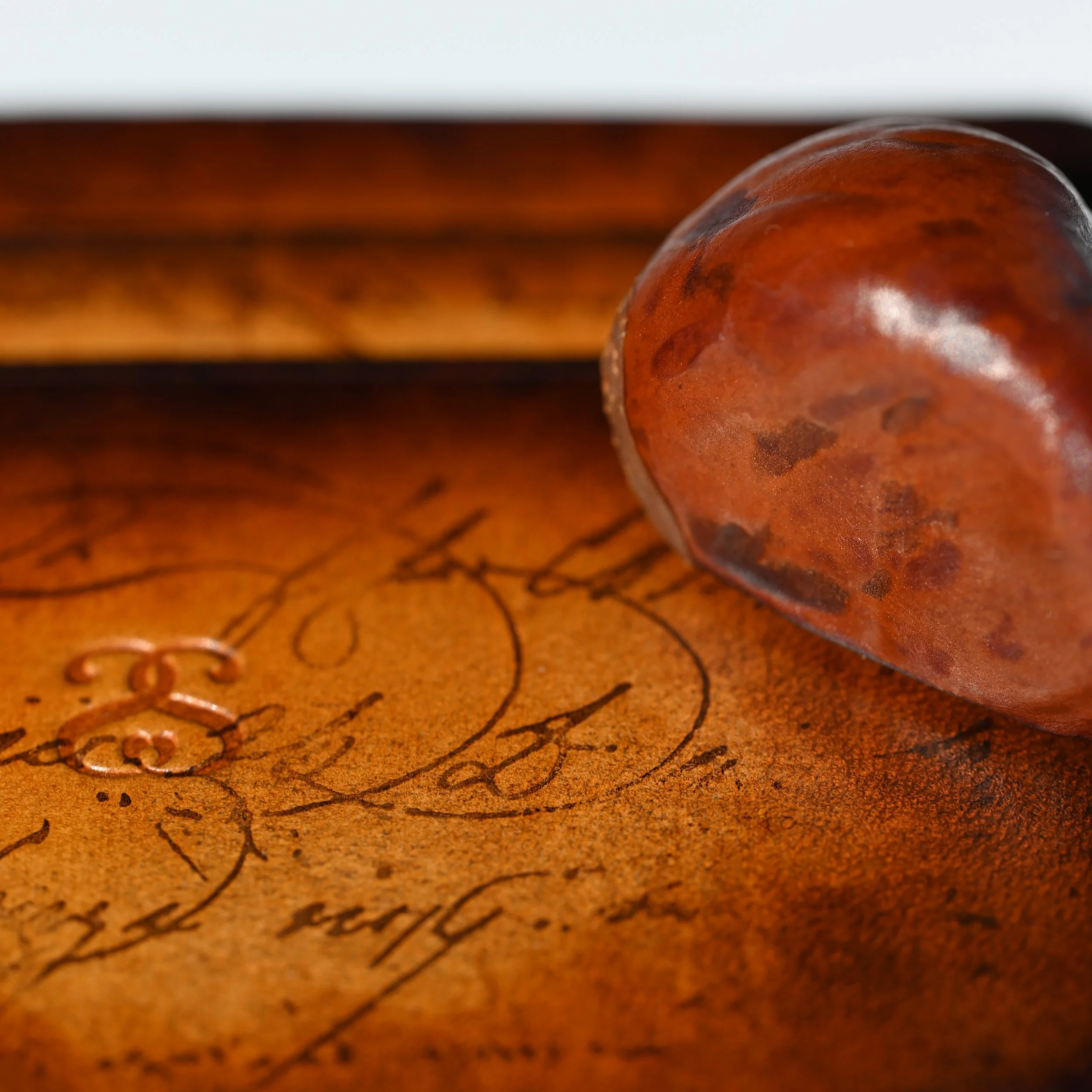
Je travaille exclusivement des cuirs à tannage végétal, issus de tanneries françaises ou italiennes, pour garantir la qualité et la durabilité de mes pièces.
